
By Abubakar Dan Ali
Scrap dealing has recently emerged as a significant economic activity across the country, providing livelihoods for thousands of people while also contributing to recycling and resource recovery. Popularly known as Iron Condemn in the Southwest and “Yan Bola” in the North, this informal business activity has equally raised growing concerns relating to public safety, environmental degradation, infrastructure vandalism, and the stealing of both public and private assets in the name of public good.
In Sokoto State, like in many parts of the country, incidents of stolen manhole covers, damaged streetlights, and vandalized public infrastructure have increasingly exposed citizens to danger and imposed avoidable costs on government in the replacement of critical infrastructure. Therefore, almost everyone would agree that there is a need for government to effectively regulate the scrap dealers and to streamline their business practices to shield the public from the proven dangers associated with the trade.
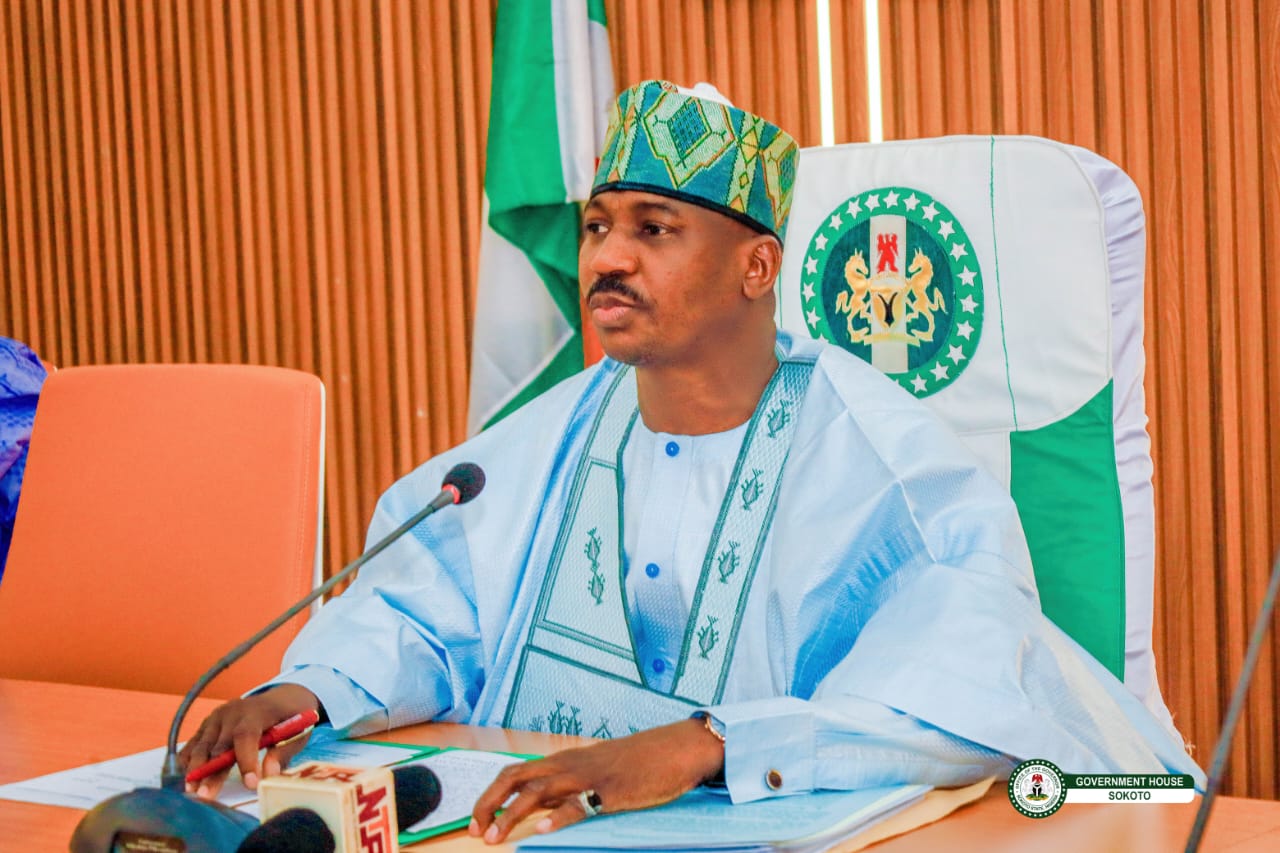
This is why the Sokoto State Government, ably led by Dr. Ahmad Aliyu, deserves commendation over its recent decision to set up the Scrap Dealing Monitoring Committee—a multi-sectoral team of relevant stakeholders—to oversee the activities of scrap dealers, scavengers, and auto-recyclers.
In taking this step, Governor Aliyu has once again displayed his reputation as a forward-thinking, responsive, and fully engaged leader who is always alert to emerging social problems and the willingness to address them through the instrumentality of governance.
According to a press statement by Abubakar Bawa, Director General of Media and Publicity, the Sokoto State Scrap Dealers Monitoring Committee, headed by Senator Salihu Bakwai, will ensure that scrap dealers and scavengers comply with government policies and best trade practices; prevent the sale of stolen, counterfeit, or hazardous materials; and collaborate with relevant industry groups to promote responsible dealings in the scrap business. Where breaches are reported, the monitoring committee—which also has Alhaji Yushau Ahmad Kebbe and Engineer Abubakar Yusuf as members—will investigate such breaches and enforce any regulation or order issued by a competent authority pursuant to relevant laws.
The initiative reflects a clear recognition by the government that while scrap dealing plays an important role in the informal economy and recycling chain, it needs to be properly regulated to prevent abuse, protect public assets, and ensure environmental sustainability. By moving decisively to introduce oversight and coordination in this sector, Sokoto State has demonstrated leadership and policy foresight that other states would do well to emulate.
Across Nigeria, unregulated scrap dealing has increasingly been linked to the theft and destruction of public infrastructure, with billions of naira lost annually to repairs and service disruptions. Electrical cables, water pipes, telecommunications equipment, railway components, manhole covers, and even streetlight installations have often found their way into scrap yards. These activities impose enormous costs on governments and citizens alike, disrupt essential services, and pose serious safety risks.
In some cases, the absence of clear regulatory frameworks has allowed criminal elements to exploit the scrap trade as a channel for laundering stolen materials. At the same time, legitimate scrap dealers, many of whom operate honestly, have suffered reputational damage due to the actions of a few bad actors.
The establishment of a Scrap Dealing Monitoring Committee by the Sokoto State Government directly confronts these challenges. It signals the government’s intention to distinguish legitimate recycling activity from criminal behavior while creating an environment in which lawful operators can function without fear.
One of the most important benefits of regulating scrap dealing is the protection of critical infrastructure. Roads, power installations, water systems, and communication networks are the backbone of modern society. When these assets are vandalized or stolen for scrap, the consequences are far-reaching; power outages, road accidents, water shortages, and increased maintenance costs that would ultimately burden ordinary citizens and in some cases lead to loss of life.
By instituting a monitoring committee, the government of Governor Ahmad Aliyu Sokoto has taken a preventive rather than a reactive approach. Monitoring scrap sources, enforcing documentation requirements, and conducting inspections can significantly reduce incentives for infrastructure vandalism. This proactive stance would help safeguard public investments and ensure that scarce government resources are not continually diverted to replacing stolen or damaged assets.
Equally important is the impact on public safety. Open manholes, exposed electrical wiring, and damaged road fixtures have led to avoidable injuries and fatalities in Sokoto State and in many other parts of the country. Any policy that curtails such dangers is not merely administrative; it is a life-saving intervention.
Scrap dealing, when properly regulated, would certainly play a vital role in environmental sustainability. Recycling metals and other materials reduces pressure on natural resources, lowers energy consumption, and minimizes waste sent to landfills. In this sense, scrap dealers are partners in environmental management rather than adversaries.
The challenge has always been the absence of structure and standards. The Sokoto State Scrap Dealing Monitoring Committee provides an opportunity to introduce order into the sector by encouraging environmentally responsible practices, proper waste handling, compliance with environmental regulations, and to stop stealing of public property.
By aligning scrap dealing with broader environmental goals, the government hopes to help transform the sector into a significant contributor to the local economy, where materials are reused and recycled in ways that benefit both the economy and the environment. This approach is consistent with global best practices and sustainable development objectives.
It is important to recognize that thousands of Nigerians have come to depend on scrap dealing for their livelihoods, particularly in urban and semi-urban areas. Any regulatory effort that ignores this reality risks unintended social consequences. The strength of Sokoto State’s approach lies in its potential to balance enforcement with inclusion.
It is commendable that the monitoring committee set up by the governor is multi-sectoral in composition, with representatives from the Ministries of Environment, Justice, Works, and Local Government Affairs, as well as security agencies such as the Police, Department of State Services, and NSCDC. The State Marshal Agency will add grassroots representation to the mix. A monitoring committee so broadly constituted and transparently operated would engage scrap dealers as stakeholders rather than treating them solely as subjects of enforcement.
Through registration, education, and dialogue, the government can help operators understand their responsibilities while protecting their right to earn a living within the law. This balanced approach fosters cooperation rather than confrontation, enhances compliance, and would reduce the likelihood of driving the trade underground, which would defeat the purpose of regulation.
The creation of a dedicated monitoring committee underscores the importance of institutional coordination in addressing serious complex socio-economic issues. Scrap dealing intersects with multiple sectors—environment, security, public works, commerce, and local government administration—and a fragmented response would certainly be ineffective.
By establishing a centralized committee, the Sokoto State Government has created a platform for coordinated action, information sharing, and accountability. Such institutional clarity would strengthen governance and ensures that policies are implemented consistently rather than sporadically.
Furthermore, the committee provides a framework for data collection and analysis. Understanding the scale, structure, and dynamics of scrap dealing within the state is essential for evidence-based policymaking. Over time, this data can inform improvements to regulations, enforcement strategies, and economic planning.
In a federal system like Nigeria’s, innovation at the state level often drives national progress. Sokoto State’s decision to regulate scrap dealing through a monitoring committee sets a positive precedent. It demonstrates that states need not wait for national directives before addressing pressing local challenges.
Other states and the Federal Capital Territory grappling with infrastructure vandalism, environmental degradation, and informal sector regulation can draw valuable lessons from this initiative. By adapting the Sokoto State model to their specific contexts, they too can strengthen oversight while preserving economic opportunities.
In this sense, Sokoto State’s action contributes not only to local governance but also to the broader national conversation on sustainable development, security, and economic regulation.
While the establishment of the committee is commendable, its long-term success will depend on how it is implemented. Transparency, fairness, and stakeholder engagement must remain central to its operations. Clear guidelines, public awareness campaigns, and accessible grievance mechanisms will help build trust and legitimacy, while guarding against potential abuses or overreach.
It is equally important that enforcement actions are guided by due process and respect for human rights. The goal of regulation should be compliance and improvement, not punishment for its own sake. When operators understand the rules and see them applied fairly, compliance becomes more sustainable.
Capacity building for committee members, collaboration with law enforcement and environmental agencies, and periodic review of policies will further strengthen the initiative.
Ultimately, the Scrap Dealing Monitoring Committee represents more than a regulatory measure; it is a statement about the kind of development Sokoto State seeks to pursue. Sustainable development requires balancing economic activity with social responsibility, environmental protection, and institutional integrity.
By addressing scrap dealing through structured oversight, the state is acknowledging that development is not only about growth but also about order, safety, and stewardship of public resources. This holistic perspective is essential in a rapidly urbanizing and economically diverse society.
The Sokoto State Government deserves commendation for establishing a Scrap Dealing Monitoring Committee at a time when the negative consequences of unregulated scrap dealing are becoming increasingly evident across the country. The initiative reflects foresight, responsibility, and a commitment to protecting public infrastructure, enhancing environmental management, and promoting lawful economic activity.
If effectively implemented and sustained with political will and public cooperation, the committee has the potential to transform scrap dealing from a source of concern into a regulated, productive, and environmentally beneficial sector. It also positions Sokoto State as a leader in pragmatic governance and sustainable policy innovation.
As Nigeria continues to confront complex development challenges, such thoughtful and proactive interventions offer a pathway toward safer communities, stronger institutions, and a more sustainable future.
Finally, the Committee should consider the establishment of a processing plant that can utilize recovered scrap materials through backward integration, transforming waste into usable industrial inputs. This approach would promote local industrial development, create employment opportunities, and ensure that the economic benefits of scrap recycling are retained within the state.

Join the Conversation