
Chidimma Uchegbu – Abuja
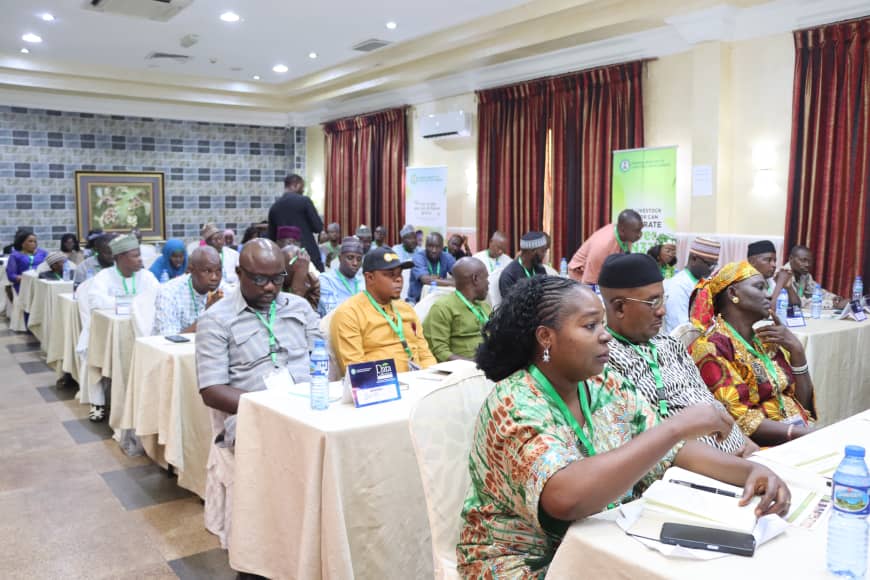
The Federal Ministry of Livestock Development has commenced a two-day hands-on training workshop for the first cohort of Livestock Data Collection Officers from the 36 states and the FCT, aimed at strengthening Nigeria’s data pipeline and standardising livestock reporting nationwide.
The workshop forms part of the Ministry’s implementation of its Monitoring and Evaluation (M&E) Framework, designed to move the livestock sector from conceptual planning to full operational readiness.
Delivering remarks on behalf of the Permanent Secretary, Dr. Chinyere Ijeoma Akujobi, at the opening of the workshop on Thursday, 4th December 2025, the Director of Livestock Extension Services, Mr. Joseph Ako, said the officers represent a nationwide commitment to placing accurate and verifiable data at the centre of policy formulation and livestock sector transformation.
This was contained in the statement signed by the Head, Press and Public Relations, Oghenekevwe Uchechukwu.
He noted that for decades, livestock planning has suffered from outdated estimates, assumptions, and inconsistent figures, making it difficult for government and investors to respond effectively to production gaps, disease burdens, and market dynamics.
“In an era of evidence-based decision-making, data is our most essential resource,” he said. “The success of the National Livestock Growth Acceleration Strategy (NL-GAS) and our transition to modern, profitable livestock systems depend on the quality of data we generate.”
The Permanent Secretary emphasised that participants constitute the first cohort in a training-of-trainers model and will be responsible for cascading the skills to officers at state and local levels.
Earlier, while welcoming participants, Mr. Ako noted that past data gaps, including the absence of updated livestock population figures since the 1992 National Livestock Census, underscore the urgency of harmonised, technology-driven data collection.
He stressed the Ministry’s resolve to end fragmented reporting and build a unified national livestock database.
Key objectives of the training include standardising tools and templates, aligning stakeholders under a unified Data Governance Framework, improving data quality, and building readiness for digital dashboards and real-time decision-making.
Participants will also co-design national data collection protocols and strengthen reporting capabilities across all livestock value chains.



Join the Conversation