
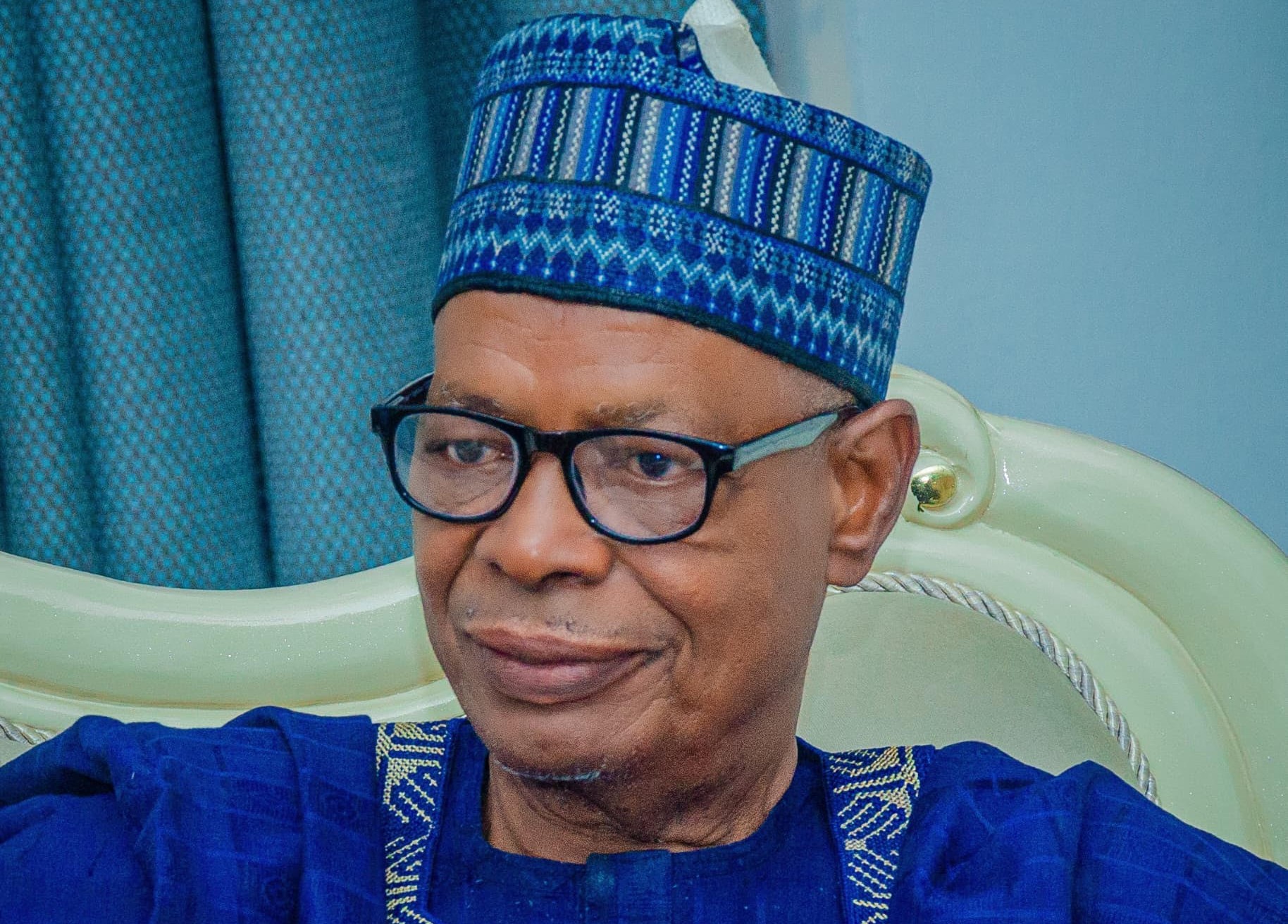
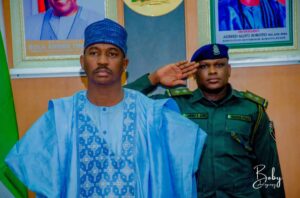
Alhaji Sambo Bello Danchadi is the Commissioner for Information and Orientation, Sokoto State. In this syndicated interview with journalists, he speaks about the Dr Ahmed Aliyu Sokoto administration, the achievements recorded so far, and the 2027 governorship election, which the governor is widely expected to win hands down.
“Governor Aliyu has significantly prioritised capital expenditure by drastically cutting down on recurrent spending. In the 2026 budget, he allocated 70% of the budget to capital projects.”
-Hon. Sambo.
Question: Honourable, you once described Governor Ahmed Aliyu as being in a hurry to correct the eight years of underdevelopment. Almost three years into his tenure, how has this sense of urgency shaped the administration’s priorities and actions so far? And a quick follow-up, has the governor been able to balance speed with careful, long-term planning to ensure sustainability?
Answer: Nearly three years into the administration of Governor Ahmed Aliyu, that sense of urgency that defined its early days has continued to shape governance in the state, rather than wane. From the outset, the governor recognised the depth of the developmental gaps he inherited and moved quickly to restore basic functionality in critical sectors while ensuring that speed did not undermine planning or due process. Guided by his 9‑Point Smart Agenda, his administration focused on areas that directly affect the daily lives of the people, security, infrastructure, education, healthcare, agriculture, and youth empowerment, while swiftly rebuilding confidence in the capacity of the government to deliver services. A key early step was reforming the civil service to ensure discipline, efficiency, and the timely payment of salaries, pensions, and gratuities. We have since put the issue of the over ₦14 billion in unpaid gratuities to retired and deceased civil servants, behind us with the governor’s immediate release of ₦4 billion and a structured payment of ₦500 million monthly to clear the outstanding backlog and an additional ₦300 million monthly to prevent accumulation. The administration has also implemented the ₦70,000 minimum wage across state and local government workers, including primary school teachers. In the education sector, the government embarked on major improvements, constructing more than 1,175 classrooms, rehabilitating over 1,000 others, providing classroom furniture, learning materials, and carrying out comprehensive reconstruction of several secondary schools, such as Nagarta College and Government Girls’ College Sokoto, with upgraded laboratories, staff quarters, and the construction of internal roads. At the tertiary level, the administration equally cleared outstanding debts owed to higher institutions, thus ensuring that our children could continue their studies. It also supported our students studying abroad, in India, and facilitated the relocation of students affected by the Ukraine crisis into Nigerian universities so they could complete their education. Importantly, the government has complemented its rapid implementation of projects and policies with reflection and review, including a midstream assessment of the 9-Point Smart Agenda to ensure that the immediate actions remain aligned with the long-term development goals of the administration and that sustainable institutions, not just projects, are being built.
The clearest evidence of this balance is the administration’s willingness to review its own flagship 9- Point Smart Agenda. By subjecting a working framework to structured interrogation, the governor has demonstrated that urgency and reflection are not mutually exclusive. The review process is about asking whether today’s solutions will still make sense tomorrow, whether implementation mechanisms are strong enough. In a nutshell, what I am saying reflects the governor’s sense of urgency. What we are dealing with is beyond the need to correct eight years of underdevelopment. And that the governor came in with a strong awareness of time: he has four years to execute his mandate. Therefore, he is focused on critical sectors such as public service, education, water, health, and security, areas where he believes he needs to make an immediate impact. Coincidentally, these areas form part of the government’s nine-point agenda, upon which it secured the mandate of the people of Sokoto State. From the outset, the governor understood that time was not a luxury the state could afford because the people had suffered from a lack of governance.
That urgency… the fact that he has no time shaped the administration’s priorities in very practical ways, the focus in restoring basic functionality in critical sectors, fast-tracking projects with immediate social and economic impact, and re-establishing order and discipline in governance processes that had over time become nonexistent. Rather than spreading effort thinly, the government moved quickly to concentrate on areas that touched on daily life, security, infrastructure, education, healthcare, agriculture, and youth empowerment, while simultaneously rebuilding institutional confidence.
I want to assure you that the governor’s “hurry” has not in any way affected due process and planning. On the contrary, it has been tempered by a strong appreciation for the need for planning and sustainability. The 9-Point Smart Agenda itself provided an early anchor, ensuring that speed was not at the expense of quality and due process. Policies, budgets, and programmes have largely flowed from this framework, allowing quick action to remain aligned with the long-term objectives. I can comfortably assert that the governor has balanced urgency with careful planning. He is very deliberate and cautious in his decisions.
Question: How has this sense of urgency shaped the administration’s priorities and actions?
Answer: The administration’s sense of urgency has shaped its priorities and actions by its strong focus on high-impact sectors such as education, healthcare, water, security, and public service, areas where citizens need quick interventions. It has led to a result-oriented approach to governance, which is reflected in the allocation of over 70% of the 2026 budget to capital projects and a firm commitment to fiscal discipline, with zero tolerance for borrowing. This urgency has translated into swift project execution, with contractors mobilised promptly, with clear timelines and strict cost-control measures such as no-variation clauses. At the same time, the government balanced speed with caution by verifying obligations and clearing inherited debts before it initiated new projects, ensuring sustainability, which has helped the government to avoid legal and financial setbacks. It has also shown that government is a continuity by completing projects started by the previous administrations, while aggressively expanding infrastructure, especially roads, across urban and rural areas, investing heavily in security, education and health facilities. The administration has prioritised security as the foundation for development, invested in local contractors to stimulate the economy, and implemented reforms such as digital revenue collection and verification systems to enhance efficiency and transparency. Overall, this sense of urgency has ensured good governance, that is, proactive, disciplined, and focused on delivering measurable results within a limited timeframe. Governor Ahmad Aliyu has shown that he is a trained financial expert, and this is evident in how he manages the resources of the state. Since assuming office, Sokoto State has not borrowed a dime from any local or foreign financial institution. The government operates strictly within its available resources. Members of the State Executive Council, and indeed the people of Sokoto State, are very proud of the governor because his administration will definitely leave no debt burden at the end of its 8-year tenure, unlike a previous administration that accumulated debt without tangible results.
When discussing foresight and results, the Sokoto Central Market is a key example. When this administration took office, part of the market had been destroyed by fire. The previous government had promised reconstruction, received donations, and even took loans by mortgaging the market, yet it failed to rebuild it. Upon assuming office, the current government initially planned immediate reconstruction but decided to first investigate the matter. That was when it was discovered that the market had already been mortgaged. Had it acted hastily, that could have led to legal disputes. The government engaged the bank, verified the debt, and cleared it to ensure full ownership before proceeding with the contract award.
Question: How much was paid to clear the debt?
Answer: The exact figure runs into billions, due to interest rates. However, the debt will be fully cleared by the end of 2025. Reconstruction work had also been awarded to local contractors, with a total project cost of ₦8.5 billion. The government paid 50% upfront and gave them a three-month completion timeline. The governor personally presented cheques to the contractors. The project is expected to be completed this year, God willing. This approach has helped stimulate the local economy. By engaging the local contractors, the government has created jobs- demand for materials- which has generated a multiplier effect across the economy.
Question: During one of the State Executive Council meetings, the governor described his tenure so far as highly successful across all ministries. Can you highlight specific policies implemented, projects completed, and measurable outcomes recorded in key sectors such as education, health, infrastructure, and local government administration?
Answer: The governor’s description of his tenure as highly successful reflects a combination of policy direction, visible outputs, and institutional re-ordering across key sectors. Though the administration itself has repeatedly stressed that its work is still in progress, there are clear areas where intent has translated into action and measurable outcomes.
Question: Can you highlight specific policies, projects, and measurable outcomes across key sectors?
Answer: The governor has significantly delivered, but he is someone who has set a very high standard for himself, so he continues to emphasise that more work lies ahead, and for members of the Executive Council to prepare for increased efforts in 2026. Notably, over 70% of the 2026 budget is allocated to capital projects. This demonstrates a clear focus on capital development rather than recurrent expenditure. This is unprecedented. In infrastructure, the government has constructed over 350 roads across the state. Sokoto State has experienced a visible transformation, with new roads, improved urban planning, and enhanced commercial activity, even at night, because of the installation of solar power streetlights. In rural areas, numerous roads have also been built to connect communities and support agriculture. These projects have helped improve access to markets and enhanced economic productivity. Most importantly, the administration has also completed several projects initiated by the previous administrations, demonstrating that development transcends political differences. Examples include the completion of the overhead bridge along Sultan Abubakar Road, the dual carriageway from Tashar Illela to More, and the Achida/Illela road. His total Commitment to the completion of the Sokoto State University Teaching Hospital and other key health facilities. In the health sector, the government has recruited over 800 nurses and midwives. It has also introduced policies requiring medical graduates who were trained by the government to serve in rural areas for a period of two years. This has helped address the issue of manpower shortages in the rural health facilities. In the health sector, the government prioritised restoring basic service delivery. Primary healthcare centres have received renewed attention through rehabilitation, re-equipping, and improved staffing, particularly in underserved communities. Policy emphasis has been placed on maternal and child health, disease prevention, and the strengthening of referral systems. The measurable outcome has been improved functionality of facilities, increased utilisation of public health centres, and a more coordinated health delivery framework aligned with state-wide planning and budgeting processes.
In local government administration, the administration has pursued reforms aimed at restoring functionality, accountability, and service delivery at the grassroots. Policies have focused on strengthening administrative oversight, improving financial discipline, and reasserting the developmental role of local councils. By aligning local government activities with state development priorities, the administration has sought to ensure that governance is felt closer to the people, not just concentrated at the centre. I must remind you that Local Government Autonomy is one of the 9- Point Smart Agenda of Governor Aliyu. Across these sectors, perhaps the most significant measurable outcome is the improved coherence in governance. Ministries and agencies now operate within a clearer policy framework anchored around the 9-Point Smart Agenda. Budgeting is more closely aligned with stated priorities, inter-ministerial coordination has improved, and projects are increasingly conceived as part of a broader development logic rather than isolated achievements. In summary, the governor’s assessment of success is grounded not only in the completed projects and implemented policies but in the restoration of direction and discipline in governance. While challenges remain and it’s important to stress that the administration itself acknowledges that development is a continuous process, the combination of tangible sectoral gains and stronger institutions provides a credible basis for that confidence.
Question: What structural reforms have been introduced to prevent past challenges?
Answer: The administration has introduced a wide range of structural reforms designed to prevent the recurrence of past challenges, particularly in the area of financial management, project execution, and public accountability. First, it has institutionalised strict fiscal discipline by ensuring that contracts are only awarded when the funds are available, thereby eliminating the practice of accumulating unpaid obligations and abandoned projects. The Sokoto State Procurement Agency has been reinvigorated. The state has reinforced upfront contractor mobilisation, often up to 30%, and firm contractual clauses that prohibit cost variations, which have protected the state from inflated project costs. Secondly, the government has strengthened verification and due diligence mechanisms across sectors; liabilities, pensions, and contracts are thoroughly audited and validated before payments are made, thus reducing fraud and ensuring transparency. In addition, the adoption of digital revenue collection systems (e-payment platforms) has blocked leakages, minimised human interference, and improved the internally generated revenue. The administration has also introduced structured provisions for recurring obligations, such as setting aside dedicated monthly funds for pension payments, to prevent future backlogs. Furthermore, it has embraced continuity in governance by completing projects inherited from previous administrations, thereby reducing waste and promoting long-term planning. Institutional oversight has been enhanced through committees tasked with monitoring project implementation and certifying completion before final payments. Altogether, these reforms represent a shift toward a more disciplined, transparent, and systems-driven model of governance that minimises risk, improves efficiency, and ensures sustainable development.
Question: How has the financial discipline supported the infrastructure development?
Answer: Financial discipline has been central to the administration’s ability to deliver sustained and large-scale infrastructure development. By operating strictly within available resources and by the government ensuring that projects are realistic, fully funded, and free from delays. This approach has built credibility with contractors, as payments are promptly made, enabling faster project execution, which has reduced the risk of abandoned projects. In addition, strict contractual terms, including the “no variation” clause, have prevented cost overruns and protected public funds from inflationary adjustments. This has allowed the government to stretch limited resources across a wider number of projects, resulting in extensive road construction, rehabilitation of schools and hospitals, and other critical infrastructure. Furthermore, verification mechanisms and oversight committees ensure that only properly executed projects receive full payment, reinforcing quality and accountability. Overall, this disciplined financial approach has created a stable, efficient system that translates directly into timely, widespread, and high-impact infrastructure development across the state.
Question: Your Internally Generated Revenue (IGR) has drastically improved. What has made the difference?
Answer: The significant improvement in internally generated revenue is largely the result of deliberate structural reforms introduced by the Governor Aliyu administration since 2023. Before then, revenue collection was heavily manual, fragmented, and prone to leakages, with limited accountability and weak monitoring systems. What has made the difference is the shift to a fully digitised revenue framework, where collections are now processed through e-payment platforms, eliminating cash handling and drastically reducing opportunities for diversion or fraud. The key is the blockage of leakages. In addition, the government has strengthened oversight by tracking revenue streams more closely and ensuring that all Ministries, Departments, and Agencies (MDAs) remit what is due. Another key factor is the expansion of the revenue base through strategic investments, particularly in agriculture and economic activities that have brought more people into the formal system. By supporting farmers with storage facilities, irrigation, and market access, the government is not only increasing productivity but is also creating taxable economic value that was previously lost to inefficiencies such as post-harvest waste. For instance, new storage facilities for onions will reduce post-harvest losses and increase farmers’ income. This will also enable better monitoring and taxation of agricultural output. Furthermore, the administration’s emphasis on transparency and accountability has improved compliance, as citizens and businesses are more willing to pay due to visible development outcomes like roads, schools, and healthcare facilities.
Question: The government is doing so much about the security situation. …why, if I may ask?
Answer: Governor Aliyu’s strong commitment to improving the security situation is driven fundamentally by the governor’s sense of responsibility to his people. For him, it is not about constitutional technicalities or the fact that security is primarily the responsibility of the federal government; it is about doing what is right and necessary to ensure the safety and well-being of the citizens of Sokoto State. He also recognises that no meaningful development can take place in an environment of insecurity, which explains why he treats security as a moral obligation and a top priority. This mindset has translated into proactive and sustained actions, providing logistical support to federal security agencies, investing in the acquisition of vehicles, equipment, and infrastructure, and strengthening community-based initiatives such as the Sokoto State Community Corps. The government also continues to support intelligence gathering and surveillance capabilities to enhance the effectiveness of security operations. Ultimately, the administration’s approach reflects a people-centred philosophy: regardless of where the constitutional responsibility lies, the governor believes that leadership must respond to the immediate needs of the people. By taking ownership of the security challenge, the Governor Aliyu administration has demonstrated commitment, responsiveness, and a clear understanding that protecting lives and property is the foundation upon which all other achievements depend. Security will always remain the top priority of Governor Aliyu. The government will continue to collaborate closely with federal security agencies and provide logistical support, including vehicles, motorcycles, and specialised equipment. It has also established a military base in Illela. Training of forest guards is underway to secure ungoverned areas. These efforts have contributed to improved security across the state. In sum, the synergy between federal agencies, international support, and the Sokoto State Community Corps has contributed to noticeable reductions in insecurity in Tangaza, Gudu, and Illela, even as the government continues to consolidate these gains through long-term strategies.
Question: What is the current situation of Internally Displaced Persons (IDPs) in the state? How many camps or host communities exist, and what interventions has the government made for the displaced persons?
Answer: The Internally Displaced Persons (IDPs) situation in Sokoto remains dynamic, with a mix of formal camps and host-community arrangements. While exact figures fluctuate due to ongoing movements, the state maintains several official camps in secure locations, alongside multiple host communities where displaced persons are integrated with relatives or residents. Under the administration of Governor Ahmed Aliyu, the government has implemented targeted interventions focused on both immediate relief and long-term resilience. These include the provision of shelter and basic amenities, regular food distribution, access to healthcare services, and support for education by integrating displaced children into local schools. In addition, the state is promoting livelihood and reintegration programmes, particularly for returnees, through agricultural support and small-scale economic assistance. Overall, the approach combines humanitarian support with efforts to restore stability and self-reliance for the displaced populations.
Question: How effective has the government been in communicating its policies and achievements?
Answer: The government, through the Ministry of Information and Orientation, the Director General of Media and Publicity and the party has been highly effective in communicating its policies and achievements through a multi-channel approach. The governor has strengthened the state-owned media organisations by upgrading the radio and television transmitters to reach wide audiences, while also using social media platforms like WhatsApp, Facebook, and Instagram for real-time updates. In-house production capabilities, including a dedicated studio, allow the ministry to create audio and video content independently, while the quarterly magazine “The Informer” documents the achievements of the administration for posterity. The administration also engages proactively with the press and issues targeted messages on issues, ensuring that citizens understand the policy and their impact. Overall, these efforts have made government communication transparent, timely, and citizen-focused. The governor also engages in town hall meetings.
Question: How does the Governor Aliyu administration view the opposition?
Answer: The Governor Ahmed Aliyu administration views the opposition as necessary in a democracy. Having once resigned as Deputy Governor to Aminu Tambuwal and being in the opposition, the governor understands the critical role a strong opposition plays in providing scrutiny, alternative viewpoints, and accountability. While the Governor Aliyu administration has not in any way stifled the opposition, unfortunately, the lack of cohesion and strategic direction among the opposition parties has limited their ability to challenge or influence policy meaningfully. We would have loved a vibrant opposition in Sokoto State, not a weak, fragmented, and largely ineffective one. Despite the lack of a strong opposition, the government has not gone to sleep – and its performance speaks for it. Such that many former critics now support the administration due to its sterling achievements. In a sense, the governor is his own one-man opposition to himself, which is why the governor remains focused on delivering results and improving the lives of the people.
Question: What are your expectations about the 2027 elections?
Answer: The administration of Governor Aliyu is highly confident that its unprecedented performance already assures it of a second term and that its achievements have laid a solid foundation for future success. Based on its record, it anticipates an even stronger mandate from the people of Sokoto State. In 2027, we will present the people with a clear and verifiable report card. Across every sector, there are tangible policies and impactful projects to showcase, evidence of a government that has remained focused on delivering real progress. Governor Ahmed Aliyu will, of course, make new commitments, but these will not be mere promises. They will reflect his determination to build upon his achievements and do even more for the people. Indeed, some local government areas have already expressed their strong sentiment that the Governor need not campaign in their communities. However, he will still visit every part of the state, not just to seek support, but to listen, engage, and better understand the needs of the people. That, in essence, is the hallmark of his leadership and the secret behind the administration’s achievements.



Join the Conversation