
By Abubakar Dan Ali
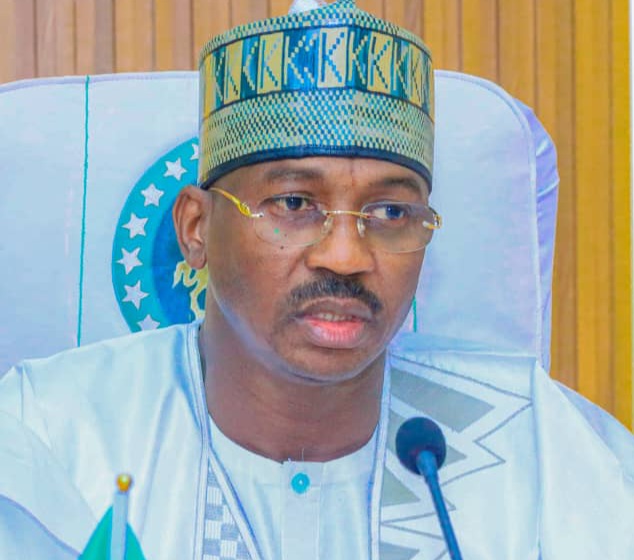
The nation’s electoral umpire has fixed March 6, 2027, for governorship and states assembly elections, and will soon blow the whistle to mark the start of electioneering campaigns ahead of the national polls. Some 18 of 36 governors, including Governor Ahmad Aliyu of Sokoto state, would be seeking renewal of their respective mandates for another four years.
For these first-term governors, the opposition candidates and independent voters would be focusing on their performance records during the campaign stumps. Ideally, those who performed very well, like Dr Aliyu, should have an easy ride to a second tenure, but those who failed woefully in their first outing should not be rewarded with a tenure renewal to continue with their display of executive incompetence.
High performing governors like Ahmad Aliyu Sokoto would be quite glad if the opposition forces would accept to base their campaign pitches strictly on issues related to the social and economic progress of the people. Unfortunately, when opposition forces see clearly that the sitting governor has performed so well, and that it would be impossible to convince the voters to dump a tested, trusted and result oriented incumbent, they often resort to dirty campaign tactics. They conjure and launch acrimonious attacks, indulge in character assassination and throw needless jabs just to foul the waters. But the average voter in Sokoto state is now sophisticated enough to distinguish between the shining light under Dr Ahmad Aliyu and the thick darkness of Aminu Tambuwal era.
In the best interest of Sokoto state and its citizens, the opposition candidates must be compelled by popular opinion to allow the 2027 campaigns to focus strictly on issues that really affect the social and economic progress of the people. Whatever happens, the stellar achievements of Governor Aliyu, based on the strategically formulated, and faithfully implemented, 9-Point Smart Agenda, has armed the All People’s Congress (APC), with strong campaign points that would easily guarantee gubernatorial victory at the polls.
Beyond the anticipated easy victory in 2027, Dr. Ahmad Aliyu has etched his name in gold as a leader who has successfully translated his vision of progressive governance (enshrined in the 9-Point Agenda) to a physical reality that everyone can see or feel. Since assuming office in May 2023, Governor Aliyu has systematically delivered results on inclusive development, demonstrating that purposeful leadership can uplift lives, unlock human potential, and revive the economic and social fortunes of a people.
Rooted in a deep commitment to inclusivity, equity, and shared prosperity, Governor Aliyu’s smart agenda blueprint has left indelible marks in each priority area of education, healthcare, water supply, agriculture, security, youth empowerment, local government autonomy, religious affairs, and economy, revealing an extraordinary transformation that touches every corner of the state.
In education the Aliyu administration has invested heavily in infrastructure and human capital with purpose and scale. Having placed education at the forefront of his development strategy, and recognizing that no society can progress without a knowledgeable, skilled, and empowered citizenry, his administration has committed an unprecedented portion of the state annual budgets to education, allocating 25 of the 2025 budget to the knowledge sector. This significant budgetary allocation, above some national and international benchmarks, has undoubtedly strengthened the school system and boosted learning outcomes.
Under his watch hundreds of primary and secondary schools have been renovated or constructed, improving learning environments for students across urban and rural communities. Qualified teachers have been recruited and empowered through continuous professional development programs. Initiatives such as the Adolescent Girls Initiative for Learning and Empowerment (AGILE) have enhanced school facilities with improved classrooms, sanitation, and boreholes, and have prioritized access for adolescent girls.
Instructional materials have been supplied, examination fees paid, and scholarship schemes expanded to ensure that no child is left behind due to lack of resources.
Tertiary institutions have not been left out, as they have seen renewed investment, restoration of courses, and the refurbishment of infrastructure, creating environments that support higher learning and economic competitiveness. These bold moves have not only increased enrolment but also restored hope in the education system, positioning Sokoto State as a model for human capital development in northern Nigeria.
In healthcare, the administration has focused on improving access and saving lives. Substantial investments in this sector have led to significant revitalization under Governor Aliyu’s leadership. Many primary healthcare centers have been rehabilitated, new general hospitals are underway, and maternal care services have been made free for pregnant women, a milestone that ensures vulnerable populations have access to quality care without financial barriers.
Partnerships with development organizations have delivered additional healthcare infrastructure and equipment to bolster frontline services.
Beyond the provision of physical facilities, routine immunization and preventive health campaigns have been strengthened, reducing disease burden and improving child health outcomes. Also social welfare programmes in the health sector, including increased monthly cash transfers for persons living with disabilities, have expanded safety nets for vulnerable citizens. By prioritizing healthcare, the Aliyu administration is building healthier communities, an essential foundation for robust economic participation and societal well-being.
In the 9-Point Agenda blueprint, water supply shares a pride of place with education, health and other priority sectors. This is understandable because access to safe and reliable water has been a long-standing challenge in Sokoto State. Governor Aliyu has tackled this head-on, completing major township water schemes and expanding water supply infrastructure across multiple local government areas
Notable achievements in the water supply sector include: The completion of a 40-million-gallon water project that has brought relief to communities long plagued by water scarcity; the rehabilitation and activation of water intake facilities to ensure steady and potable water delivery; investments in additional water machinery and expansion of distribution networks to underserved rural communities.
These efforts have not only improved the availability of potable water humans and animals, but also reduced the occurrence of water borne diseases. Quite importantly also, it has reduced the burden on women and children who traditionally bear the responsibility of fetching water, enabling them to participate more fully in education and economic activities.
It is important to note that Dr Aliyu’s 9-Point Agenda framework was not the product of solo effort, as it was put together by a committee of experts and issue-owners who deeply appreciate the role of agriculture as the lifeblood of Sokotos economy, employing the majority of the populace. Accordingly, agriculture is deservedly captured as a priority sector in the Aliyu administrations scale of preference. The policy thrust agricultural has combined traditional farming with modern techniques, aiming to boost productivity, food security, and farm incomes across the state.
During the campaign for reelection, Governor would be flaunting his key initiatives and legacy achievements in the agricultural sector that include: The completion of large-scale irrigation schemes such as the Kware Irrigation Scheme, enabling year-round cultivation and higher crop yields; distribution of irrigation pumps, threshers, milling machines, and tractors to farmers, womens cooperatives, and youth groups to enhance mechanization and post-harvest processing; Collaboration with federal programmes like the integrating solar energy into irrigation to improve sustainability and reduce operational costs.
The administration has also committed huge resources toward the expansion of commercial farming and value-chain projects that increase production of staples like rice, onions, garlic, and moringa, thus positioning Sokoto as a potential agro-industrial hub. As a result these and other related efforts, agriculture in Sokoto state under Governor Aliyu is no longer seasonal or subsistence-based, but strategic, productive, and poised to drive rural prosperity.
Security is important, not only to the people of Sokoto state, but every citizen of any country. In fact, it is said that security of life and property is the primary reason for the existence of government anywhere in the world. Governor Aliyus development blueprint recognized that no development agenda, no matter how smart or carefully crafted, can succeed without a good measure of peace and social stability. The administration did not stop at enlisting security as an area of particular concern, but the governor has consistently pursued a policy of proactive intervention and collaborative measures with the federal security agencies with exclusive responsibility to secure the law-abiding citizens.
Specifically, Dr Aliyu’s administration has strengthened logistics and intelligence support for security agencies operating in local government areas most affected by activities of terror merchants; worked with communities to foster vigilance and cooperation in reporting threats; restored and increased allowances for security personnel to boost morale and operational effectiveness.
While security challenges persist, these interventions have reinforced the resilience of communities and improved the operational capacity of law enforcement, building a safer environment for residents to live, work, and thrive.
In the area of youth empowerment, Governor Aliyu would have many points to use during his reelection campaign. His administration says it recognizes that the youth are not a problem, but they are a solution to the problem. Through programmes like NG-CARES, Ahmadu-CARES, plus targeted skills acquisition initiatives, the government has empowered thousands of young people across Sokoto State.
Youth empowerment under his leadership has taken many forms, namely, vocational training and digital skill programmes that equip young people with competencies in technology, entrepreneurship, and creative industries; grants and financial support for startups and micro enterprises, particularly those led by women and youths; employment opportunities tied to major government projects, including feeding programmes that created temporary jobs for women and youth during Ramadan.
By fostering self-reliance and expanding opportunities, Governor Aliyu is charting a path where the youth become active contributors to economic growth rather than passive observers.
Significantly, Governor Aliyus development blueprint had captured local government autonomy as an area of vital importance to strengthen grassroots participation in governance and socio-economic progress. Long before the Supreme Court gave a ruling that supported autonomy of the third tier of government; a forward looking Ahmad Aliyu had sent executive bill to the state House of Assembly to strengthen the system by guaranteeing three irrevocable years to elected officials, instead of two years. True inclusivity demands that governance be effective, accessible and responsive at the grassroots. The Aliyu administration has also advanced local government autonomy by empowering councils to play more active roles in development planning and service delivery.
Through improved budgetary allocations and reforms that enhance transparency and accountability, local governments are now better equipped to address community needs, from infrastructure to basic social services, with speed and effectiveness.
This decentralization has rekindled citizens trust in government and reinforced the principle that decision-making, especially on issues that affect daily life, should be as close to the people as possible.
While religion affects the life of every Muslim faithful and shapes their daily conduct, most state governments in the core North do not accord special status to Religious Affairs. But Governor Aliyus 9-Point Smart Agenda enlisted it as an area of particular importance, which is quite understandable in a state revered as the Seat of the Caliphate, where religious life is central to identity, culture, and community cohesion. Governor Aliyus approach to religious affairs has been one of respect, inclusivity, and support for spiritual institutions.
Highlights of his legacies in the Religious Affairs sector include: Expansion of Ramadan feeding programs that served more than 600,000 citizens and generated income for women preparing meals; revival of stipends for imams and muazzins and grants for Islamic scholars and organizations that promote peace, charity, and unity, renovation of mosques and Islamiyya schools, and installation of solar power in worship spaces.
These faith-aligned interventions have strengthened community values while ensuring that religious activities contribute to social development and humanitarian support. And finally in the 9-Point Smart Agenda development framework is Governor Aliyus intervention in the economy, marked by fiscal prudence, measurable growth, inclusiveness, and resilience. Underpinned by commendable fiscal discipline, Governor Aliyus economic strategy has nurtured growth and stability without resorting to costly commercial loans, an achievement few sub-national governments can boast of.
Sokotos 2026 budget prioritizes capital projects (71 percent of total expenditure) and targets catalytic sectors that drive jobs, trade, and productivity. During the campaign for an assured mandate renewal, Governor Aliyu can conveniently and freely parade notable economic achievements like: massive infrastructure investments that improve mobility of persons and goods, and stimulate trade, from numerous rural and urban roads, to key state arterial route connections, not forgetting purchase of high power mass transit buses and subsidized transportation programmes to cushion citizens against economic shocks.
Sokoto state government under Dr Ahmad Aliyu stands out as the only one that has conducted a homegrown Multidimensional Poverty Index (MPI) survey to support a data-driven planning, which ensures evidence-based policy interventions. Also, by fostering an enabling environment for businesses, agriculture, and innovation, his administration is laying the groundwork for sustained economic growth and shared prosperity.
On the whole, Governor Ahmad Aliyus 9-Point Smart Agenda has not been a mere checklist; it has been a comprehensive governance philosophy rooted in people-centered policy, fiscal responsibility, and strategic partnerships. His administrations achievements across education, healthcare, water, agriculture, security, youth empowerment, local government autonomy, religious affairs, and economic growth stand as testimony to what visionary leadership can deliver even in challenging times.
From rural villages to urban centres, from school classrooms to hospital wards, the impact of Governor Aliyus policies is visible, measurable, and life-changing. As Sokoto State continues on its upward trajectory, citizens can be proud that their government is working not for headlines and photo optics, but for tangible progress and shared opportunity.
Governor Ahmad Aliyu’s inclusive development legacy reminds us that good governance is neither a rocket science nor an abstract ideal: it is a living reality shaped by strategic decisions that elevate human dignity and unlock collective potential. In view of his spectacular performance in two and a half years, the reelection bid is looking more like a walkover or, as the Americans would say, a done deal!!



Join the Conversation