
By Louis Achi
Beyond Nigeria’s two officially inscribed UNESCO World Heritage Sites – the Sukur Cultural Landscape in Adamawa State, and the Osun-Osogbo Sacred Grove in Osun State – recognized for their outstanding universal cultural value, not many know that the sedate “Seat of the Caliphate,” the present-day Sokoto State, hosts several important historical and touristic sites equally worthy of UNESCO recognition.
Some of these include Hubbaren Shehu, Hubbaren Muhammadu Fodiyo in Degel, Tabkin Kwato, Alkalawa, and Surame, among others. The good news is that executive marching orders to reinvent these important historical, touristic gems have been handed down so they can assume their pride of place in the new Sokoto envisioned by youthful Governor Ahmed Aliyu.
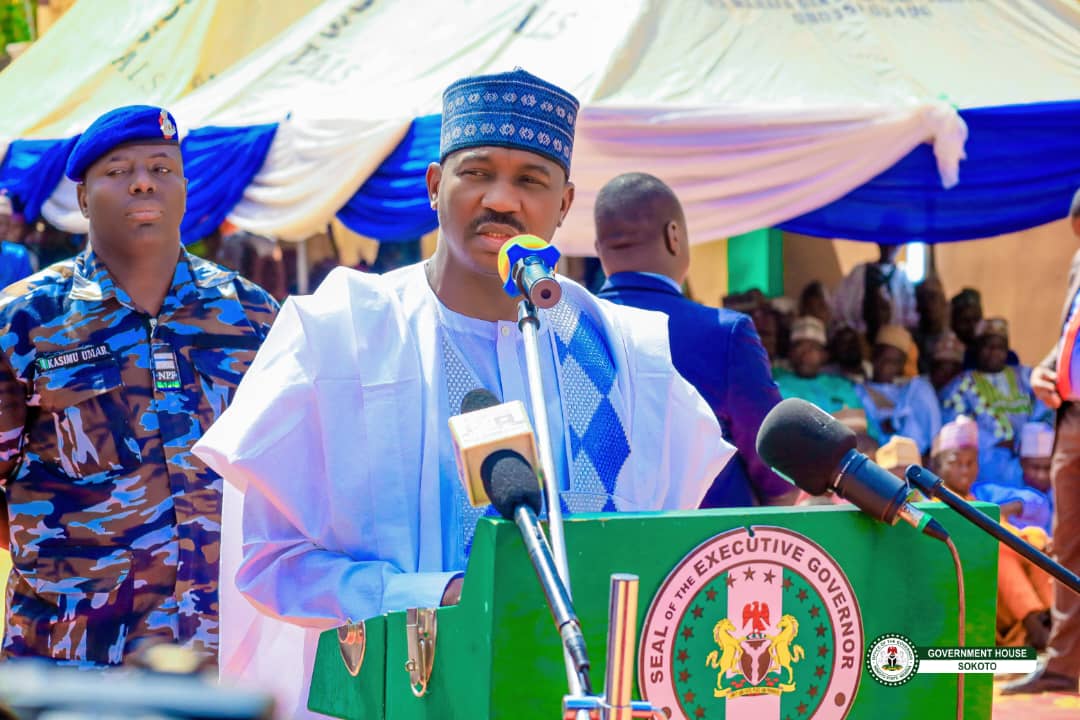
“The revival and improvement of these historical sites will preserve the rich history of the Caliphate and its founders, while providing a conducive environment for tourists, scholars, and researchers,” an elated, resolute Governor Aliyu told his rapt audience last Friday during the commissioning of the remodeled Zawiyatu Sheikh Aliyu Bunza.
Fleshing out the underlying vision the governor explained the decision was informed by Sokoto’s status as the seat of the Caliphate, which is home to numerous historical monuments and artifacts, many predating the jihad period, that must be preserved for posterity.
For good measure Governor Aliyu also provided more insights to his gameplan: “We intend to engage the federal government for stronger collaboration on how best to improve and develop our historical monuments. We will use all available means to ensure these sites are protected and preserved.”
He was not done. The governor specifically directed all relevant stakeholders in charge of historical sites to begin preparations immediately and produce a comprehensive blueprint for their revival and development.
In effect, these well thought out efforts to strengthen the tourism sector of the state and enhance revenue generation by reviving historical sites across the state speaks to a new consciousness and deservedly positioning Sokoto State on both the continental and world tourism and historical sites map.
Perhaps not surprisingly, tourism gurus note that developing these sites into major tourist destinations through collaboration between the federal and state governments could significantly boost revenue for both levels of government.
Undoubtedly, tourism is a massive global revenue spinner, generating trillions for the world economy, creating millions of jobs, and boosting GDP through diverse streams like hospitality, transport, and retail. In Nigeria, many subnationals like Sokoto State and the federal government see huge potential for growth by leveraging unique cultural assets, infrastructure, and strategic promotion.
This why Governor Aliyu’s bold resolve to reinvent and exploit tourism by updating historical sites in Sokoto is a game changer. Against this back drop, it would be pertinent to look at some of Sokoto’s tourism assets that should be able to attract tourists, scholars, and researchers.
The Ancient City Ruins of Alkalawa, Sabo Birnin, Sokoto, are what remain of the former city, and capital, of Gobir, folks who were believed to have come from Arabia during the 11th century. Alkalawa was the capital of the Hausa city-state of Gobir, founded in the eleventh century, staying under Hausa rule for nearly 700 years.
It was eventually subdued and assimilated by Usman dan Fodio who birthed the Sokoto Caliphate. It is now located within modern Sokoto State. This is a tourism magnet waiting to be fully exploited as the governor’s vision is fully unfurled.
Meanwhile, Hubbaren Shehu is the most visited historic site in the ancient city of Sokoto. It is a cemetery for the royal families and holds the tomb of revered great Islamic Reformer and founder of Sokoto Caliphate, Usman dan Fodio.
According to Mai Bude Hubbare (the person charged with taking care of Hubbare), Alhaji Bala Ibrahim, eight Sultans are resting at the Hubbare and the most recent one was Sultan Ibrahim Dasuki, the 18th Sultan of Sokoto, who died ten years ago. Hubbaren Shehu is a vital cultural and historical monument, attracting pilgrims and tourists, with the state government planning to develop it further.
Then there is the ancient city of Surame. The about 28 square kilometres vast area of land lying in silence between Binji and Silame Local Government Areas of Sokoto State was once the booming political headquarters of Kabi Kingdom in the 15th Century. It is known as Surame City and is situated at one of the busiest Trans-Saharan routes along the bank of River Rima, now in Sokoto.
Its first king was a great warrior called Muhammad Kanta. According to historical accounts he died on his way from a war campaign in the Kanem Bornu Empire. It was believed that Surame and the associated site of Gungu, are the biggest stone cities with great potentials in archaeological value covering over 28 square kilometres.
Partnering the federal government, Governor Aliyu’s new vision of reinventing these abandoned historical sites promises unlocking a transformative tourism industry in the Seat of the Caliphate.
As of 2026, Nigeria has over 10 sites on the tentative list for future nomination as World Heritage Sites. These include: Ancient Kano City Walls and Associated Sites (Kano State); Ogbunike Caves (Anambra State); Idanre Hill (Ondo State); Alok Ikom Stone Monoliths (Cross River State); Cross River-Korup-Takamanda National Parks; Lake Chad Cultural Landscape; and Gashaka-Gumti National Park.
Currently, Sokoto is missing on the list. And this has not escaped the observant attention of Governor Ahmed Aliyu. Little wonder he is scripting a compelling new blueprint to get Sokoto on the Heritage list and the world map and harvest the associated touristic goodies to boot.
Tourism generates revenue through Direct Spending: Visitors spend on hotels, food, local transport, souvenirs, and activities, directly fueling businesses; Service Exports: Money spent by international tourists counts as an export, bringing foreign currency into the country; and Infrastructure & Investment: Tourism demand encourages investment in roads, airports, and communication, benefiting the whole economy.
Others include Job Creation: The sector supports vast employment in hotels, restaurants, travel agencies, and related services; and Diversification: For resource-dependent states, tourism offers a path to economic diversification away from single industries like oil.
As investment is crucial to fertilising tourism, better packaging, aggressive marketing, improved infrastructure, and private sector involvement to realize full potential are imperatives. As the Sokoto State chief executive mainstreams cultural preservation, economic diversification, and identity renewal, it doesn’t require a seer to predict the future is bright for the Seat of the Caliphate.
For Sokoto, it’s indeed a tourism renaissance. Clearly, youthful Governor Ahmed Aliyu means business.
ENDS




Join the Conversation