
By Usman Garba Abubakar
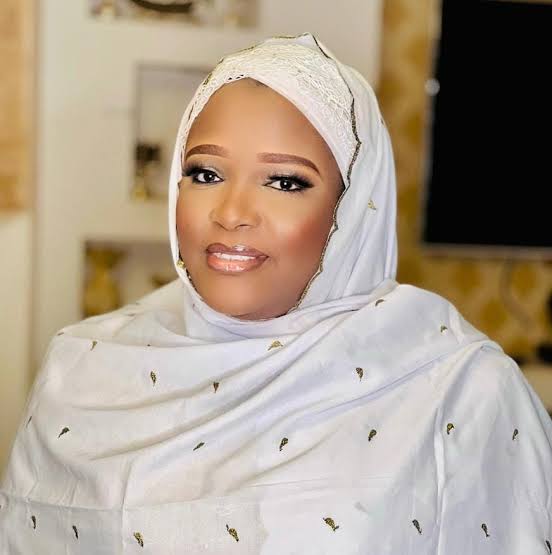
In recent months, Sokoto State First Lady Hajiya Fatima Ahmed Aliyu has drawn public attention to two initiatives she is vigorously championing. One focuses on strengthening safety in schools through a declared zero-tolerance stance against gender-based violence (GBV). The other expands access to male circumcision services as a public health intervention. At first glance, these initiatives may appear unrelated,because one addresses violence and child protection, and the other addresses health service delivery for boys and men. Yet, taken together, they offer a revealing window into how gender priorities are framed, funded, and implemented in public policy, and whether the state is confronting the structural roots of inequality or relying on discrete technical fixes.
The pairing of these policies invites a deeper question,how can governments balance health interventions with human rights commitments in ways that genuinely advance gender equity and child protection? More importantly, do public narratives and resource allocations reflect the urgency of ending GBV, or do they risk sidelining rights-based concerns in favour of more politically comfortable health programmes?
Sokoto State’s zero-tolerance policy on GBV in schools sends more than a symbolic message. In a context where cultural norms, silence, and fear often discourage reporting and protect perpetrators, a public declaration that violence will not be tolerated matters. And that schools should be safe environments where children can learn without fear. While girls are disproportionately affected by sexual harassment, exploitation, and abuse, boys are not immune. Corporal punishment, bullying, sexual abuse, and coercion also affect boys, though these experiences are often even more hidden due to stigma and expectations around masculinity. A credible GBV policy like that being pushed by the First Lady must therefore protect all children, while recognising gendered patterns of vulnerability.
At the same time, the expansion of male circumcision services reflects a well-established public health strategy. Medical male circumcision has long been promoted in Nigeria and across West Africa for its role in reducing certain health risks, including HIV transmission and other infections. In Sokoto State, these services are typically delivered through health facilities with clear implementation structures, trained personnel, and support from development partners.
It is important to acknowledge the leadership role being played by the Governor’s wife in advancing these initiatives. First Ladies in Nigeria often operate in an informal policy space, without statutory authority or guaranteed budgets, yet they often use their platforms to draw attention to neglected issues. By publicly prioritizing school safety and child protection, alongside health access, Sokoto’s First Lady has helped elevate conversations that have too often been avoided. This visibility should be seen as a starting point for institutional action, not a substitute for it.
However, when these two initiatives coexist within the same policy environment, they expose deeper questions about gender, power, and prioritization. Health services for boys and men are delivered through established systems, while protection from violence, particularly in schools, depends on enforcement, monitoring, and cultural change. The contrast highlights an uncomfortable reality: providing health services is often easier than dismantling the social and institutional conditions that allow violence to persist.
Public health and human rights are not competing agendas; they are mutually reinforcing. A child cannot be healthy without being safe, and safety without access to essential health services is incomplete. Sokoto State understands that the challenge lies in integrating these priorities rather than treating them as parallel tracks.
Ending GBV requires more than declarations. It demands sustained investment in prevention, survivor support, accountability mechanisms, and community engagement. Nigeria already has legal and policy frameworks relevant to this work, including the Child Rights Act and the Violence Against Persons (Prohibition) Act, which Sokoto State has domesticated in different forms. What remains uneven is implementation, particularly within schools. It must be stressed that policies are only as effective as the institutions that enforce them.
Health initiatives, including those focused on boys and men, must also be designed with a gender lens. Male circumcision programmes, for instance, often emphasize service uptake, clinic coverage, and procedure numbers. Rarely do they engage questions of consent, age-appropriateness, or how norms around masculinity intersect with violence, risk-taking, and silence around abuse. Ignoring these links risks treating health outcomes while leaving underlying inequalities untouched.
Structural drivers of GBV in Sokoto include unequal power relations, economic dependency, harmful social norms, weak accountability systems, and limited reporting mechanisms within schools. A zero-tolerance policy, while necessary, does not automatically change these conditions. Without teacher training, confidential reporting channels, survivor-centred response systems, and clear consequences for perpetrators, zero tolerance risks becoming a slogan rather than a safeguard.
By contrast, health service expansion often benefits from clearer funding streams, donor alignment, and established monitoring frameworks. This creates an imbalance: measurable health outputs advance quickly, while the slower, politically sensitive work of social change lags behind. When boys’ health needs are met through well-resourced programmes while children’s safety depends on underfunded enforcement mechanisms, inequity is quietly reproduced rather than challenged.
To translate zero tolerance into real protection, several steps are essential. Accountability mechanisms must be accessible to students, parents, and teachers. Reporting pathways must be clear, confidential, and free from retaliation. Data collection and public reporting are equally critical; silence should not be mistaken for success. Independent oversight, involving civil society, education authorities, and child protection experts, can strengthen credibility and trust.
Community engagement must also be central. Schools reflect the societies around them. Engaging parents, religious leaders, traditional institutions, and youth groups in conversations about consent, dignity, and child rights helps shift norms that normalize abuse or discourage reporting. Notably, male circumcision programs often invest heavily in community sensitization and trust-building. Applying similar rigor to GBV prevention would signal that child protection is equally non-negotiable.
Ultimately, the issue is not whether Sokoto should invest in health services for boys or safety measures for schools. Both are necessary. The real test is for the state to align its budgets, institutions, and accountability systems with a holistic vision for child protection and gender justice.
If zero tolerance for GBV is to mean more than words, it must be matched with resources, enforcement, and transparency. If health interventions are to contribute to equity, they must engage the social norms that shape vulnerability and silence. Sokoto State now has an opportunity to move beyond technical fixes toward transformative governance—where every child is not only healthy, but safe, heard, and protected. And there is no doubt that that is where the indefatigable First Lady Hajiya Fatima Ahmed Aliyu, wife of Governor Ahmed Aliyu Sokoto is heading. She is actively involved in social empowerment initiatives, including programmes to support women, children, education, and vulnerable groups across the state.





Join the Conversation