
By Okey Okwusogu
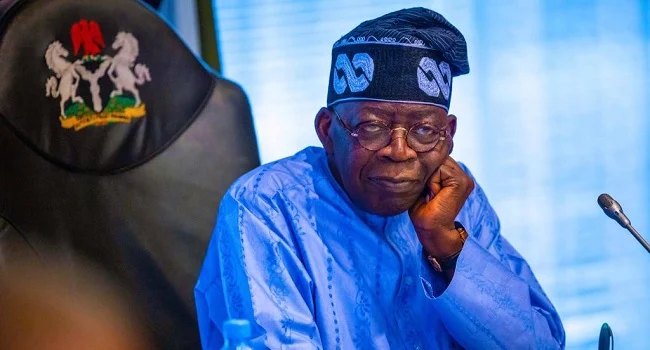
In the evolving political landscape of Nigeria, concerns are mounting that the country may be inching toward a de facto one-party state under President Bola Ahmed Tinubu’s administration. Since his inauguration in May 2023, a wave of high-profile defections from opposition parties to the ruling All Progressives Congress (APC) has reshaped the nation’s multiparty democracy. Governors from states like Delta, Enugu, Akwa Ibom, Rivers, Plateau, and Taraba have crossed over, swelling APC’s ranks to potentially 28 governors. This trend, coupled with allegations of federal interference in opposition crises, has sparked debates about the erosion of political pluralism and the risks of authoritarian consolidation. While APC officials dismiss these claims as baseless, insisting there’s no plot to monopolize power, critics like former Vice President Atiku Abubakar warn of an “existential threat” to democracy, potentially leading to a civilian dictatorship.
This shift raises a critical question: If Nigeria solidifies into a one-party dominant system, could it face the kind of revolutionary upheaval or overthrow seen in other nations historically? Drawing from past examples of one-party states crumbling under popular pressure, this article explores the possibilities, weighing Nigeria’s unique context against global precedents.
The Current Trajectory: From Multiparty Vibrancy to APC Hegemony? Nigeria’s return to democracy in 1999 marked the end of military rule, ushering in a competitive multiparty system. However, under the current dispensation the terrain to some Nigerians is being viewed as opaque from an oblique perspective, the political arena appears increasingly lopsided to most critic. Defections are often attributed to patronage, protection from investigations, or alignment ahead of the 2027 elections, rather than ideological shifts. For instance, Rivers State Governor Siminalayi Fubara’s recent switch to APC followed intense political pressure, including suspensions and reinstatements, fueling accusations of intimidation. Similarly, Plateau Governor Caleb Mutfwang’s defection in early 2026 has been cited as evidence of a broader strategy to consolidate power.
Opposition figures argue this is not mere political maneuvering but a deliberate push toward one-party rule. Atiku has accused the administration of “shrinking democratic space” by weakening rivals like the People’s Democratic Party (PDP) through engineered internal conflicts. Even within the PDP, former chairman Umar Damagum alleged leadership’s camp was fueling divisions to pave the way for unchallenged dominance. Social media echoes these fears, with users warning that Nigeria risks becoming “a one-party system like Lagos under Tinubu’s long influence. “Proponents of this view point to past statements, including skepticism about “one Nigeria,” as indicators of a deeper agenda.
Yet, not all see doom. APC chieftains like Senator Magnus Abe counter that defections are voluntary and reflect effective governance, not coercion.They argue Nigeria is experiencing “dominant-party politics” rather than outright one-party rule, a phase seen in other democracies like South Africa under the ANC. Tinubu himself has publicly disavowed support for a one-party state, emphasizing democratic choice. Still, with economic hardships—rising inflation, fuel subsidies removal, and currency devaluation—exacerbating public discontent, the stage is set for potential unrest if opposition voices are further marginalized.
Historical Precedents: When One-Party States Collapse: History offers stark lessons on how entrenched one-party systems can unravel through revolutions or uprisings. The most salient examples come from the Revolutions of 1989 in Eastern Europe, where communist one-party regimes, backed by Soviet influence, fell amid economic stagnation and popular demands for freedom.
In East Germany, the Socialist Unity Party’s monopoly crumbled under peaceful protests known as the Peaceful Revolution. Starting with small demonstrations in 1989, they swelled into millions, culminating in the Berlin Wall’s fall and reunification with West Germany. Key factors included economic decline, loss of legitimacy, and Gorbachev’s Soviet reforms withdrawing external support.
Czechoslovakia’s Velvet Revolution followed a similar non-violent path. Student-led protests and a general strike in November 1989 forced the Communist Party to cede power, installing dissident Václav Havel as president. Here, civil society mobilization and elite defections were pivotal.
Romania’s case was bloodier: Widespread protests in December 1989 escalated into armed clashes, leading to the execution of dictator Nicolae Ceaușescu and the end of the Romanian Communist Party’s rule. Repression backfired, turning public anger into violent overthrow.
Poland’s transition began earlier with the Solidarity movement in the 1980s, evolving into semi-free elections in 1989 that dismantled the Polish United Workers’ Party’s dominance. Economic crises and worker strikes eroded the regime’s base.
Beyond communism, Portugal’s 1974 Carnation Revolution saw a military coup, backed by civilian protests, topple the authoritarian Estado Novo—a de facto one-party system under the National Union. Economic woes from colonial wars and public fatigue with repression fueled the change.
These cases illustrate that one-party states are vulnerable when faced with economic hardship, loss of external backing, internal divisions, and sustained mobilization. Peaceful revolutions succeeded where civil society was organized, while violence erupted in more repressive contexts.
Possibilities in Nigeria: Revolution or Resilient Dominance? Applying these lessons to Nigeria, the prospects of a revolution or overthrow hinge on several factors. First, economic distress mirrors the 1989 triggers: Tinubu’s reforms, while aimed at long-term stability, have inflicted immediate pain, with inflation soaring and poverty deepening. Past protests like #EndSARS in 2020 demonstrated Nigerians’ capacity for mass action against perceived injustices, potentially amplifying if one-party dominance stifles accountability.
Second, opposition fragmentation could either prevent or provoke upheaval. If defections continue, reducing viable alternatives, it might lead to apathy or radicalization. Critics warn of a “Machiavellian approach” where Tinubu “pockets” politicians, but this could alienate the public if policies fail to deliver. A united opposition coalition, as suggested by some, involving figures like Atiku, Peter Obi, and Rabiu Kwankwaso under a neutral platform, might counter this—but disunity risks ceding ground.
Third, Nigeria’s diversity—ethnic, religious, and regional—complicates one-party consolidation. Unlike Eastern Europe’s homogeneous regimes, attempts to centralize power could ignite sectional tensions, as seen in warnings that “Nigeria is not Lagos. Historical military coups in Africa, like those in Sierra Leone or Gambia, often ended one-party eras, but Nigeria’s post-1999 stability suggests civilian uprisings or elite pacts are more likely.
However, revolution isn’t inevitable. Nigeria’s judiciary, media, and civil society remain robust, potentially checking excesses. If Tinubu’s administration delivers on infrastructure and security, dominance could endure without backlash, akin to long-ruling parties elsewhere. Yet, as one analyst notes, “a one-party system is the most dangerous” for democracy, risking complacency and corruption.
A Crossroads for Nigerian Democracy: Nigeria’s potential slide into one-party dominance under Tinubu evokes the fragility of systems like those in 1989 Eastern Europe. While peaceful revolutions there show people power can prevail, Nigeria’s context—marked by economic volatility and diverse interests—could either foster similar change or entrench the status quo. The key lies in whether public discontent translates into organized action or dissipates amid patronage. As history warns, ignoring these signs risks not just political monopoly, but the explosive unrest that follows. For now, the nation watches, hoping pluralism endures.
*Okwusogu, an intelligence analyst wrote in from Abuja, Nigeria.




Join the Conversation