
By Emmanuel Ado
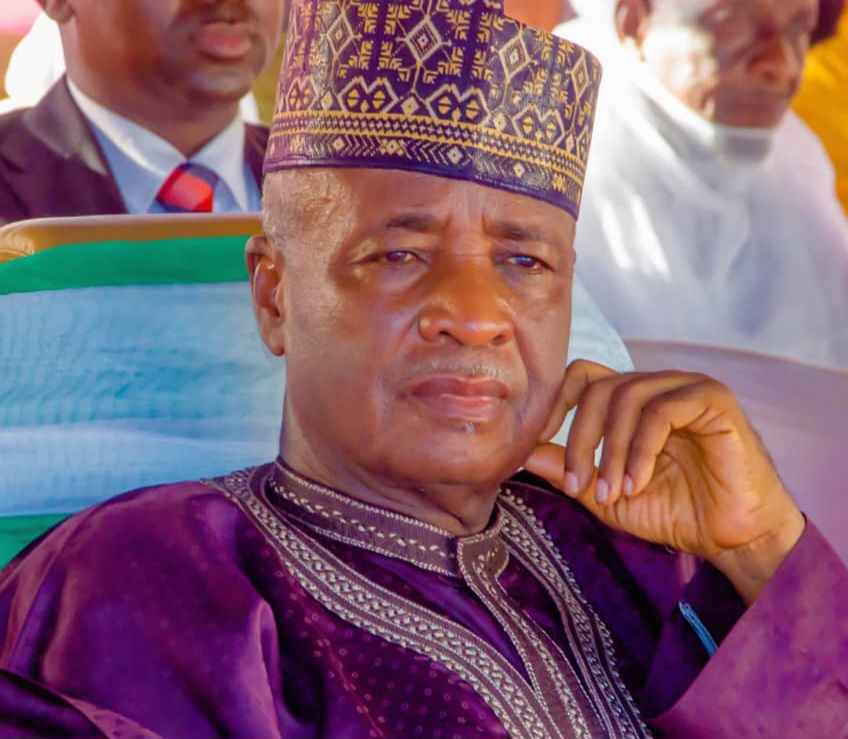
Senator Aliyu Magatakarda Wamakko’s public endorsement of President Bola Ahmed Tinubu during the Sokoto State chapter of the All Progressives Congress (APC) electronic membership registration exercise is a strategic endorsement. It is a statement that has continued to reverberate far beyond the North – West Zone, effectively clearing whatever doubts may have existed, especially in the South-West Zone, about the president’s support- or lack of it- in the North. In a political climate where perception often competes with reality, the clarity by Wamakko carries enormous political weight.
The importance of the endorsement of the president by Wamakko lies largely in the electoral history and voting strength of the North – West Zone. Since the Second Republic in 1979, the region has consistently determined the political pendulum in presidential elections, owing to its sheer voting numbers and its reputation as a zone whose electorate reliably turns out on election days. With the largest bloc of registered voters in the country, the North – West Zone remains central in any serious national political calculation. Senator Wamakko’s support, therefore, signals that President Tinubu enjoys a credible and influential backing in the country’s most decisive electoral zone.
The reality of the North’s political importance becomes even clearer when viewed against historical precedent. In 1979 election, President Shehu Shagari’s victory was anchored on the overwhelming support from the North- particularly from the following Northern States of Sokoto, Kano, Kaduna, Niger, Bauchi, Borno, Kwara, Gongola. Of the 9 Southern states Shagari failed to outrightly win any, but he did manage to cross the 25% constitutional threshold which helped in his overall spread and complemented his performance in the North. That pattern has persisted in the 1999, 2003, and 2007 general elections, during which the North- West Zone has consistently produced the largest bloc of votes nationwide. In the 2003 election, the region recorded well over nine million votes more than the other five geopolitical zones, which firmly established it as the backbone of electoral victory for any candidate that it backs.
The same trend continued in the 2015 and 2019 general elections, when the North- West Zone again delivered the highest number of votes, the foundation of the late President Muhammadu Buhari’s victories. He was also helped by the first-ever handshake between the North and South -West Zones, which hitherto were politically opposed. Even in the 2023 election, despite a historically low voter turnout nationwide, the North- West Zone remained the single largest voting bloc by registration, accounting for more than 22 million registered voters and in voting. Significantly, it delivered more votes to the then candidate Bola Ahmed Tinubu than any other geopolitical zone. It is this consistency, electoral weight, and turnout discipline that has earned the region its enduring and bragging rights as the kingmaker in Nigerian politics.
Senator Wamakko’s unalloyed support, therefore, is not incidental or symbolic. It is underpinned by the historical weight that the North- West Zone possesses and confirms that Tinubu enjoys credible and influential backing where it matters most. In a political system where numbers, structure, and mobilization often outweigh rhetoric, such backing will certainly reshape strategic calculations.
Senator Wamakko is not just any party leader. He remains the only deputy governor who since 1999 has remained politically relevant. Since 2007, Sokoto State has remained under his firm control, including retiring former governor Attahiru Bafarawa from politics. Over the decades, he has demonstrated an uncommon ability to remain central to political developments at the highest levels and has retained the loyalty of his grassroots supporters. His influence in the North -West Zone and beyond is not accidental; it is the product of sustained political engagement, strategic alliances, and an enduring connection to both the electorate and the political class.
Wamakko’s political dexterity was most recently evident in his role in facilitating the defection of the three PDP senators from Kebbi State to the APC. He also facilitated the reconciliation between Senator Abdul’aziz Yari and Senator Yerima, both former governors of Zamfara State. The Edo State governor also owes his election to Wamakko, who convinced the president to adopt him as his candidate. These developments have not only altered the regional political balance but also underscore Wamakko’s reach, political skills, and acceptability beyond his immediate political base. For a figure of such standing to openly back President Tinubu sends a powerful message to party faithful, opposition figures, and the broader electorate that the president’s leadership enjoys the confidence of influential actors like him.
Beyond the immediate endorsement, Wamakko’s action also serves a broader strategic purpose: it deepens and reinforces the political relationship between the North and the South-West Zones. Nigerian politics has long been driven by negotiated alliances and reciprocal understandings, particularly between zones. By openly standing with Tinubu, Wamakko is strengthening not just the present cooperation but also deepening the political trust between the two zones. As is often acknowledged in political circles, alliances are rarely one-sided; they are built on mutual confidence and the understanding that support extended today will be acknowledged tomorrow—an IOU that will be redeemed in 2031 by the North. In that sense, Wamakko’s move reinforces the recent North–South West partnership.
The endorsement also came at a highly symbolic moment—the commencement of the Sokoto State chapter of the APC’s electronic membership registration exercise. Held at the Bola Ahmed Tinubu Hall in Gawon Nama, Sokoto, the exercise was far more than an administrative formality; it was a reaffirmation of the party’s renewed commitment to internal discipline, effective party management, and grassroots mobilization. By deliberately choosing Wamakko as the first registrant, the party sent a clear message about his preeminent status and the value it places on his leadership.Governor Ahmed Aliyu deserves credit for the great esteem he holds Wamakko.
The electronic registration of party members itself carries significant implications. It enhances accuracy by eliminating duplicate or fictitious entries, thus creating a reliable, centralized membership database. It also improves transparency and accountability in party administration, making it easier to verify membership and conduct credible internal elections. More importantly, it strengthens grassroots mobilization by enabling real-time tracking of members across wards and local government areas while reducing the inefficiencies and costs associated with manual record-keeping. Ultimately, the initiative will modernize party management and help build a more organized, inclusive, and data-driven political structure.
Coming more than a year before the 2027 general elections, the timing of this exercise by the APC is clearly strategic. It signals that the APC is laying the groundwork early—strengthening its internal structures, consolidating its base, and positioning itself for effective nationwide mobilization ahead of the polls. Electoral victories are rarely improvised; they are achieved through preparation, organization, and sustained engagement. The e-registration exercise reflects a clear understanding of this reality.
During the ceremony, Senator Wamakko proudly described President Tinubu as a leader determined to reposition Nigeria on the global stage, enhance human capital, and drive sustainable development. “I know what he intends for the good people of this great nation, Nigeria,” he declared, urging Nigerians to understand and support the president’s vision. His remarks were deliberate and measured, reflecting confidence not only in the president’s leadership but also in his policy orientation and long-term developmental agenda. By publicly aligning with the president, Wamakko further reinforced the principle that leadership is most effective when it enjoys the support and trust of respected stakeholders.
In Nigeria where political divisions often undermine development efforts, Senator Wamakko’s endorsement carries significance. It underscores the importance of unity and cooperation between leaders and citizens in driving national progress. His backing lends both legitimacy and momentum to the implementation of the president’s policies while ensuring that Tinubu’s achievements resonate within a key geopolitical zone whose support often determines national outcomes.
Beyond its immediate political implications, the Sokoto APC’s e-registration exercise offers a broader lesson for the other political parties. It demonstrates how parties can strengthen internal democracy, modernize operations, and mobilize supporters while aligning organizational reforms with national development goals. If replicated across the political landscape, such initiatives could contribute to a more disciplined, accountable, and forward-looking political culture—one in which leadership credibility and citizen participation reinforce each other.
Equally important is the inclusive nature of the exercise. Alongside Wamakko, the registration featured the Deputy Governor of Sokoto State, Idris Muhammad Gobir, ministers, ambassadors-designate, and local party leaders. This comprehensive involvement reflects an understanding that political success and national progress are collective endeavors. Leadership at the top is essential, but so is the engagement with leaders at all levels, particularly those with deep regional influence like Senator Wamakko, who can mobilize support and mediate competing interests to advance policy goals.
In a country often criticized for disorganization and political fragmentation, Senator Wamakko’s endorsement of President Tinubu stands out as both strategic and substantive. It illustrates how leadership, when supported by influential figures with deep regional roots, can foster cohesion and advance national development agendas. His strong backing sends a clear message that progress depends on constructive leadership, the alignment of influential actors, and the willingness of citizens to engage with the leadership.
By publicly supporting Tinubu, Wamakko is encouraging Nigerians to rise above partisan divides and focus on the shared goal of national development. His call for understanding and cooperation is both pragmatic and visionary, as is Wamakko’s public prayer for guidance for President Tinubu.
Ultimately, Wamakko’s support for Tinubu is a game-changer. It brings with it huge political capital, influence, strategic timing, and inter-regional alliance-building to reinforce a vision of leadership grounded in credibility, results, and national progress. In a nation yearning for stability, unity, and development, the endorsement provides a blueprint for how influence, authority, and vision can intersect to move Nigeria forward.

Join the Conversation