
By Louis Achi
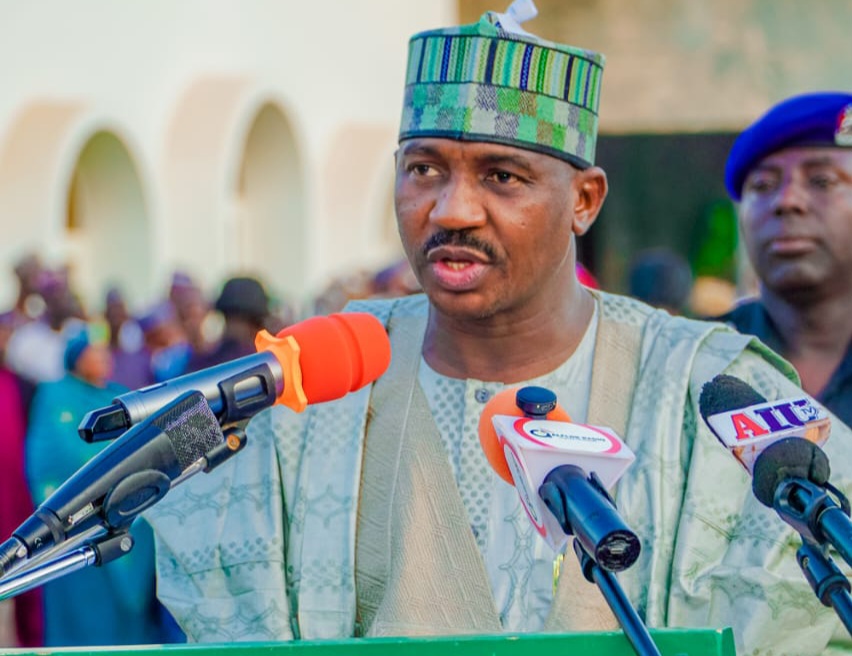
As Sokoto State stepped into 2026, Governor Ahmed Aliyu used the moment of the transition not for rhetoric, but to reassure the people of Sokoto State that though 2025 was marked by economic pressures and security challenges, he had nevertheless been able to lay a firm foundation for sustained development.
In his New Year address, the governor presented what can best be described as his consolidation agenda: a deliberate focus on strengthening gains already recorded, tightening fiscal discipline, and accelerating inclusive development across critical sectors.
At the heart of the governor’s message was a clear signal of continuity. Having navigated 2025 amid national economic headwinds and persistent security concerns in the North-West, the Aliyu administration has positioned 2026 as a year to deepen impact rather than experiment with new policy directions. The governor’s roadmap aligns closely with his 9 -point Smart Innovative Agenda, which continues to shape policy priorities and guide governance outcomes in Sokoto State.
Peace and security remain central to the administration’s focus. Like many states in the region, Sokoto State has grappled with the challenge of banditry and terrorism, particularly across thirteen local government areas bordering Zamfara State. Governor Aliyu reaffirmed that strengthening the security architecture of the state remains fundamental to social stability and economic growth. According to him, a comprehensive blueprint has been developed to further enhance support for the security agencies through improved logistics, intelligence gathering and sharing.
While Governor Aliyu appealed to security operatives to intensify their efforts in defeating the insurgents in the coming year, he also emphasized the importance of community cooperation. He urged residents, especially those in the vulnerable areas, to support security agencies by providing timely and actionable information on suspicious movements or activities.
Recognising that early intelligence often determines the success of security interventions, he called on local communities to remain vigilant and proactive in safeguarding their environments. For the governor, the security and welfare of his people is non-negotiable, hence the heavy investment in security.
In the education sector, the administration’s priorities are reflected both in policy commitments and budgetary decisions. The 2026 budget allocates ₦116 billion to education, in line with the UNESCO recommendation that governments devote between 15 and 20 percent of public expenditure to the sector, which he has consistently surpassed.
Governor Aliyu’s assurance that all ongoing renovations of primary, secondary, and tertiary institutions would be completed, alongside the provision of additional physical infrastructure to improve learning environments across the state, is bankable considering that education is key for him in driving the development of the state.
Teacher welfare, would continue to receive priority attention, acknowledging the central role educators play in driving inclusive growth and human capital development. In addition to formal education, the governor also reaffirmed his administration’s commitment to the promotion of Islamic affairs, a key component of Sokoto State’s cultural and religious heritage.
Plans are underway for the construction of new Islamiyya schools, as well as the rehabilitation of existing ones in dilapidated condition, to ensure that religious education facilities meet acceptable standards.
Healthcare remains a key priority in the Governor Aliyu administration’s 2026 agenda. With an allocation of over ₦122.7 billion – representing more than 16 percent of the total budget and exceeding the 15 percent benchmark established by the 2001 Abuja Declaration – the health sector is positioned for significant expansion and improvement.
These resources are being directed toward the speedy construction of new hospitals across the state, alongside the ongoing rehabilitation of existing facilities to enhance capacity and service delivery. Modern medical equipment is being procured for both primary and secondary healthcare centres, ensuring that residents have easy access to quality care close to their communities. Through these investments, the administration aims to strengthen health outcomes, reduce pressure on urban hospitals, and provide sustainable healthcare infrastructure that meets the needs of Sokoto State’s growing population.
If there is one area where the governor has made a significant difference, it is in infrastructural development. Roads, housing, and urban projects have become a defining feature of the Aliyu administration’s development framework. The governor has thankfully confirmed that all ongoing housing projects in Wajake, Gidan Salanke, and Sokoto New City are on track for completion before the end of the second quarter of 2026.
Similarly, rural and township road projects currently underway are expected to be completed within the same period, improving connectivity, facilitating the movement of people and goods, and supporting economic activity across the state. These strategic investments reflect a deliberate approach to building infrastructure that not only addresses immediate needs but also lays the foundation for long-term socio-economic growth.
For the governor, these infrastructure initiatives are designed not only to address housing deficits and mobility challenges, but to also stimulate local economic activity. And road construction and housing development provide employment opportunities while strengthening linkages between urban centres and rural communities, thereby supporting broader socio-economic integration.
Water remains a critical pillar of socio-economic development, and Governor Aliyu has made its provision a central priority for 2026. He affirmed that all ongoing water scheme projects would be completed within the year, while additional machinery will be deployed at the state’s main water intake facilities to boost capacity and reliability.
By ensuring a steady supply of clean and safe water, these interventions are set to improve public health, support agriculture, enhance daily living for families, and strengthen industrial and commercial activity. Reliable water access, the governor emphasized, is not just an infrastructural goal but a foundation for sustainable growth and improved quality of life across Sokoto State, particularly in urban and peri-urban communities.
Agriculture, a vital source of livelihood for a large segment of Sokoto State’s population, continues to receive focused support from the Aliyu administration. The government has sustained the distribution of farm inputs and implements to farmers, while contracts for the procurement of tractors and other mechanised equipment have been awarded to enhance productivity.
These initiatives are designed not only to increase farm output and efficiency but also to strengthen food security, create employment opportunities, and drive sustainable growth in the state’s agricultural sector.
By investing in people, the administration seeks to foster inclusive growth and build a resilient, economically active citizenry across Sokoto State. As Sokoto steps into 2026, Governor Ahmed Aliyu used the New Year as an opportunity to outline a consolidation agenda aimed at strengthening gains already achieved, sustaining fiscal discipline, and accelerating development across key sectors.
With a clear focus on security, infrastructure, health, education, agriculture, and social empowerment, the governor presented a roadmap for the year that emphasizes both continuity and measurable impact.
One of the defining features of Sokoto State’s 2026 fiscal framework is its emphasis on discipline and sustainability. The budget is structured with 72 percent allocated to capital expenditure and 28 percent to recurrent expenditure, a ratio that aligns with recommendations by international financial institutions such as the IMF and World Bank. This structure underscores the administration’s focus on long-term development rather than short-term consumption.
Sectoral allocations further reinforce this orientation. The economic sector accounts for 41 percent of total spending, followed by the social sector at 37 percent, informing the theme of the 2026 appropriation as the “Budget of Socio-Economic Expansion.” Notably, the governor highlighted that the budget is designed without new borrowing, a significant point in a national environment where many subnational governments continue to grapple with rising debt profiles.
Sokoto State’s ability to fund capital projects while maintaining a debt-free status with contractors reflects a cautious and deliberate approach to public finance management. Governor Aliyu’s emphasis on zero-deficit budgeting, fiscal realism, and project prioritisation points to a governance philosophy that values sustainability and accountability over fiscal adventurism.
With just over two and a half years in office, the Governor Aliyu administration has focused on altering the state’s development trajectory through structured interventions rather than short-term fixes. This approach has enabled the execution of numerous projects without resorting to loans, even amid the economic uncertainties.
As 2026 unfolds, Sokoto State’s development journey has certainly moved into a phase where results continue to take precedence over promises. The key challenge for the administration will be to avoid distractions from its well-defined policies, disciplined budgeting, and strategic planning into visible, which have produced tangible outcomes that enhance livelihoods, create opportunities, and reinforce public trust in governance.
Governor Ahmed Aliyu’s consolidation agenda provides a clear roadmap for 2026: to build on past achievements, invest in people and critical infrastructure, uphold fiscal discipline, and expand inclusive growth. For Sokoto State, the year offers an opportunity to show that careful planning, coupled with consistent and effective implementation, can translate into sustainable development and shared prosperity for all residents.
ENDS



Join the Conversation