
By Louis Achi
As Jack Lew, former United States Secretary of the Treasury, once observed, “A budget is not just a collection of numbers, but an expression of our values and aspirations.” In a similar vein, UK Chancellor Rachel Reeves has described the budget as an opportunity to bring honesty and credibility to public finances. These two ideas—values and realism—provide a useful framework for examining Sokoto State’s 2026 fiscal proposal.
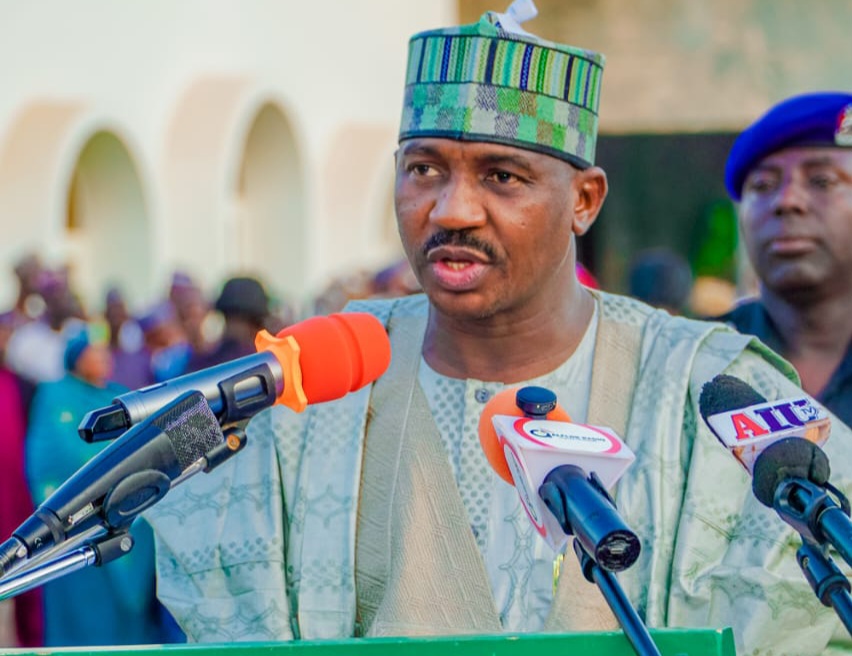
Governor Ahmed Aliyu’s ₦758.7 billion 2026 Appropriation Bill, aptly titled “Budget of Socio-Economic Expansion,” was presented to the Sokoto State House of Assembly on December 17, 2025. Beyond its size, the budget stands out for its deliberate attempt to align ambition with fiscal discipline, development priorities with available resources, and governance objectives with the everyday realities of citizens.
At a time when public trust in government budgeting remains fragile across Nigeria, the Sokoto proposal seeks to project credibility. According to the governor, 41 per cent of the budget is allocated to the economic sector, 37 per cent to the social sector, and a striking 72 per cent to capital expenditure. These figures are significant not merely because of their scale, but because they align with international benchmarks recommended by institutions such as the IMF and the World Bank. More notably, the budget is funded without recourse to borrowing, relying instead on statutory FAAC allocations and internally generated revenue (IGR).
This zero-deficit posture is particularly instructive in the Nigerian context. Weak budget implementation, driven largely by unrealistic revenue assumptions and heavy dependence on borrowing, has become a recurring problem at both federal and sub-national levels. In many cases, budgets are passed with optimism but implemented with difficulty, leading to abandoned projects, mounting arrears, and eroded public confidence.
Sokoto’s recent fiscal record suggests an alternative path. By aligning expenditure strictly with credible revenue projections, the state reportedly achieved nearly 70 per cent implementation of its 2025 budget. This level of performance is uncommon among sub-national governments and was achieved without borrowing a single kobo. It lends weight to the argument that fiscal realism, rather than sheer budget size, is the key determinant of performance.
This approach echoes the position of Dr. Muda Yusuf, Chief Executive Officer of the Centre for the Promotion of Private Enterprise (CPPE), who has consistently argued that Nigeria’s budgetary challenges stem from overly optimistic assumptions. He has called for expenditure plans to be firmly anchored to realistic revenue expectations and aligned with productivity-enhancing priorities. Sokoto’s 2026 proposal appears to reflect this philosophy in both structure and substance.
The revenue framework of the budget underscores this realism. Of the ₦758.7 billion proposed, ₦389.3 billion is expected from the state’s share of FAAC, ₦74.5 billion from internally generated revenue, and ₦61.1 billion from the opening balance. Capital receipts—including grants and capital development funds—are projected at ₦233.8 billion. On the expenditure side, ₦551.5 billion, representing 72 per cent of the total outlay, is earmarked for capital projects, while recurrent expenditure stands at ₦207.2 billion. Importantly, total expenditure is matched exactly with projected revenue, reinforcing the administration’s no-deficit stance.
Beyond the arithmetic, the process that produced the budget deserves attention. The 2026 proposal emerged from consultations held across Sokoto’s three senatorial zones—Tambuwal, Tangaza, and Gwadabawa. These engagements allowed citizens, community leaders, and stakeholders to articulate priorities and concerns, which were then reflected in the final document. In an era where public participation in governance is often more rhetorical than real, this consultative approach enhances the budget’s legitimacy and relevance.
Sectoral allocations further illuminate the administration’s priorities. Health received ₦122.7 billion, representing over 16 per cent of the total budget and exceeding the 15 per cent benchmark set by the 2001 Abuja Declaration. This allocation reflects a recognition of healthcare as both a social service and an economic investment. Key projects include the completion of the Sokoto State University Teaching Hospital at Kasarawa, the Murtala Muhammad Hospital, and Premier Hospitals in Binji, Tambuwal, and Sabon Birni. Additional funding is earmarked for modern medical equipment, staff training, recruitment of health personnel, and the procurement of 21 ambulances for general hospitals across the state.
Education, another cornerstone of long-term development, was allocated ₦115.9 billion. This falls within UNESCO’s recommended range of 15–20 per cent of total expenditure. The allocation spans basic, secondary, science, and higher education, reinforcing the administration’s emphasis on human capital development as a driver of social mobility and economic competitiveness.
Agriculture received ₦18.7 billion, targeted at boosting food security through the provision of fertilisers, tractors, grains, and other farm inputs. In a region where agriculture remains a major source of livelihood, this investment has implications not only for food availability but also for rural incomes and economic stability.
Water resources attracted ₦41.1 billion, which will support the rehabilitation of water works, rural water supply projects, procurement of treatment chemicals, and the installation of solar-powered systems for the state water board. Access to clean water remains a critical public health and social issue, and this allocation reflects its cross-cutting importance.
Security, a pressing concern given prevailing national challenges, was allocated ₦45.3 billion. These funds are intended to support security agencies through the procurement of equipment, vehicles, motorcycles, and other logistics. While security remains a shared responsibility between federal and state authorities, this allocation signals the state government’s commitment to safeguarding lives, property, and economic activity.
The works and transportation sector received ₦109.1 billion, representing about 7.9 per cent of the total budget and aligning with global best practice benchmarks of 5–8 per cent. Planned interventions include road construction and rehabilitation, as well as investments in public transportation such as buses and service vehicles to improve mobility and commerce across the state.
The budget also addresses social welfare concerns. Humanitarian services, poverty reduction, and youth empowerment programmes were allocated ₦33.9 billion. These interventions are particularly relevant in a context of rising unemployment and economic vulnerability, especially among young people.
Religious affairs received ₦17.5 billion, covering the rehabilitation of mosques and Islamiyya schools, community services, and support for religious activities, including Ramadan feeding programmes. Given the cultural and social role of faith-based institutions in Sokoto, this allocation reflects an attempt to balance spiritual, social, and developmental considerations.
Taken as a whole, the 2026 budget reflects a deliberate emphasis on capital investment, social development, and economic expansion. With 41 per cent allocated to the economic sector and 37 per cent to the social sector, the thematic focus of the budget is clearly mirrored in its structure.
As retired American actress Nathalie “Tippi” Hedren once remarked, “You can have a million-dollar budget, but if you don’t have a good script, it doesn’t mean a thing.” In governance, the script is not merely the numbers on paper but the discipline, realism, and intent behind them. Through a consultative process, a commitment to fiscal realism, and a strong tilt toward capital expenditure, Governor Ahmed Aliyu’s administration has presented a budget that aspires to translate policy into tangible outcomes.
Ultimately, the true test of the 2026 “Budget of Socio-Economic Expansion” will lie in its implementation. If executed with the same discipline that shaped its formulation, it could reinforce Sokoto State’s emerging reputation as a sub-national government where planning, prudence, and people-centered development intersect.

Join the Conversation