
By Louis Achi
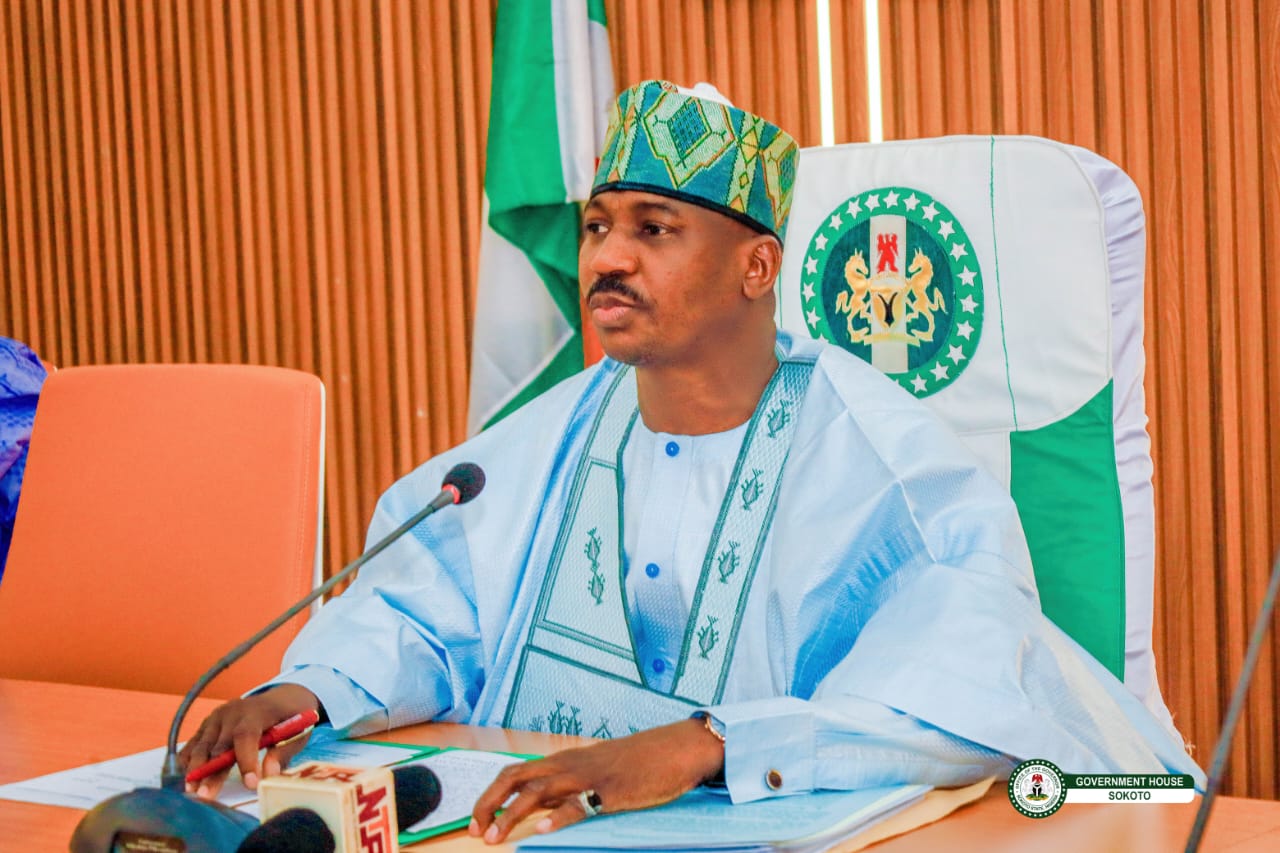
In a conservative northern milieu where education outcomes and related support infrastructure have lagged, the targeted migration of significant resources is demonstrably marking a turning point for human capital development. This is the current story of Sokoto State under the nimble leadership of youthful Governor Ahmed Aliyu.
Put succinctly, this education sector rebranding encapsulates a psychological and institutional reset. Unquestionably, it represents a conscious effort to rebuild public trust and to align democratic governance with the new architecture codified in Governor Aliyu’s development agenda. This footing signals an inclusive, empathetic yet firm and result-oriented, novel governance template.
For context, Governor Aliyu’s nine-point SMART agenda include – education, health, water, agriculture, security, youth empowerment, local government autonomy, religious affairs, and economy. He significantly recognizes the necessary complementarity and synergy between his administration’s first agenda – education – and the imperative transformation of Sokoto State.
It is then not surprising that the Governor Aliyu administration allocated 25 % of the 2025 budget to education, along with the concomitant massive infrastructure revamp, teacher pay enhancements and accreditation improvements. By surpassing UNESCO’s recommended benchmark of 15-20%, the administration has demonstrated its priority for education, which is critical to achieving sustainable development.
For instance, Sokoto State’s 2025 budget of “Transformation and Infrastructural Sustainability,” notching N526,882,142,484.39 targets consolidation of achievements of the 2024 budget. The state’s 2025 budget has a recurrent expenditure of N176,295,602,130.14 billion and a whopping N349,386,540,354.25 billion for capital expenditure, a 34:66 percent recurrent to capital ratio.
According to the former Commissioner for Information and Orientation, Hon. Sambo Bello Danchadi, “Some key areas of focus for the 2025 budget include: Education: with 25% allocation; devoting substantial portion of the state’s budget to education is a significant commitment to improving the sector. This move will help address infrastructural deficits, fund educational programs, and ensure the effective delivery of teaching and learning.
From the basic to tertiary levels in the state, the governor’s premium on education is obvious from the re-accreditation of several courses in its tertiary institutions and the massive construction of schools, renovation of dilapidated buildings, provision of furniture, and instructional materials, the prompt payment of examination fees for students writing the West African Examinations Council (WAEC) and National Examinations Council (NECO) examinations, and the payment of outstanding scholarships for students undergoing various degree programmes.
Governor Ahmed Aliyu’s vision for educational transformation is mirrored in various specific interventions. His APC-led administration has prioritized education as a cornerstone of societal progress.
A significant highlight of his tenure is the intervention for 88 Sokoto State medical students affected by the crisis in Sudan. Rather than allowing these future healthcare professionals to languish in uncertainty, the governor facilitated their transfer to Usmanu Danfodiyo University Medical College, ensuring their education remained uninterrupted.
This bold initiative underscores his administration’s commitment to nurturing human capital and fostering resilience in the face of challenges.
The Sokoto State administration has also invested heavily in educational infrastructure and teacher training programmes. By creating enabling environment for both students and educators, the administration is building foundation for a more enlightened and competitive youth population in Sokoto State.
It is no secret that over 800,000 children in the state have been enrolled into basic education schools, marking a drastic increase in the number of enrolments into public primary schools and attributes the increased enrolment to the efforts of the state governor to improvement of education infrastructure across the state.
The current administration has renovated one block of three classrooms in 22 primary schools across Sokoto North and South. It has also completed two new faculties (Engineering and Agriculture) at Sokoto State University. It has also re-introduced and enhanced quality examinations while promoting all teachers who were due for promotion.
It has also paid the N70,000 minimum wages to primary school teachers while reviewing students’ feeding allowance from N150.00 to N450.00. The administration has also initiated a monthly cash allocation to principals for minor school repairs.
In April, the Governor Aliyu administration initiated a digital training programme designed to transition participants from digital illiteracy to digital literacy and provide extensive training in computer literacy, graphic design, video editing, social media marketing, and AI for productivity. This critical project was collaboratively anchored by the State’s Ministry of Innovation and Digital Economy (MIDE) flagged-off by the Commissioner, Hon. Bashar Umar Kwabo.
Governor Aliyu further announced the state government’s plans to train further 10,000 individuals across the state, aimed at enhancing digital skills and promote self-sustainability. Participants, drawn from all 23 local government areas in Sokoto State have reported significant improvements in their digital skills since the program’s inception.
The training covered essential courses, including Digital Computer Literacy, Social Media Marketing, Graphic Design, Video Editing, and Artificial Intelligence for Productivity.
This initiative is a key component of Sokoto State’s proactive strategy to prepare its citizens for digital transformation. MIDE remains dedicated to advancing digital literacy, technological advancement and fostering innovation across all sectors of the economy of Sokoto State.
By its deliberate, heavy investment in educational infrastructure and teacher training programmes, the government is creating enabling environment for both students and educators. The administration is in effect building foundation for a more enlightened and competitive youth population in Sokoto State.
As Sokoto exploits and leverages the crucial tool of education to achieve accelerated transformation in a development-hungry milieu, Governor Aliyu has also scaled-up the place of technology to explore diverse development models in the world and settle for the best “Next-Level” option. Technology unquestionably is a key development facilitator.
Significantly, the administration has accomplished these feats without borrowing a kobo from any bank or financial institution within or outside the country. This is unprecedented. These well thought out interventions flowing from the increased education sector budget have observably translated into improved outcomes – quality of learning, accreditation, infrastructure, and teacher morale boost.
Some observers have understandably raised issues of associated challenges given the pace of the transformations. Some cite the absorptive capacity of the state, monitoring, corruption, teacher retention. These are of course legitimate, constructive posers.
A proper response to these concerns pivots on the vision of Governor Aliyu. The governor’s background as a renowned accountant and administrator infuses his governance with data-driven precision, turning abstract metrics into tangible benefits for his Sokoto constituents. Prudent forward planning has turned out to be his forte – and this is a critical plank of his education vision.
From the outset, he had pledged to work to create an all-inclusive education sector revamp that is efficient, transparent and centred on the wellbeing of all Sokoto citizens and residents.
Like most states in the North-Western zone, Sokoto State is faced with insecurity ranging from terrorism, banditry, kidnapping and others. Insecurity is negatively affecting education in Sokoto and contiguous states by increasing dropout rates, disrupting academic activities, and impacting the morale of both students and teachers. Fear of violence causes parents to withdraw children from school, and attacks on facilities can lead to school closures.
The need to confront the challenges of insecurity with the seriousness it deserves did not escape Governor Aliyu’s attention. In this connection, beyond closely partnering with the federal security forces, his administration has procured and donated over about 150 well-equipped security patrol vehicles to the security personnel to ease their task in fighting the disruptive enemies of the state.
Additionally, Governor Aliyu also established Community Guard to assist the conventional security in tackling the challenge by providing intelligence to them. As a local entity, the Community Guard knows the locality more than the conventional security personnel.
Cut to the bone, the Governor Aliyu administration understands the imperative of human capital development and the need for total commitment to the education sector of needful resources and provision enabling infrastructure to realise this.
This understanding has powered the impressive grounds his government has covered so far in the crucial education arena, despite the challenges.
It is then not surprising that in Sokoto State, the Seat of the Caliphate, education leads the pack.
ENDS


Join the Conversation