
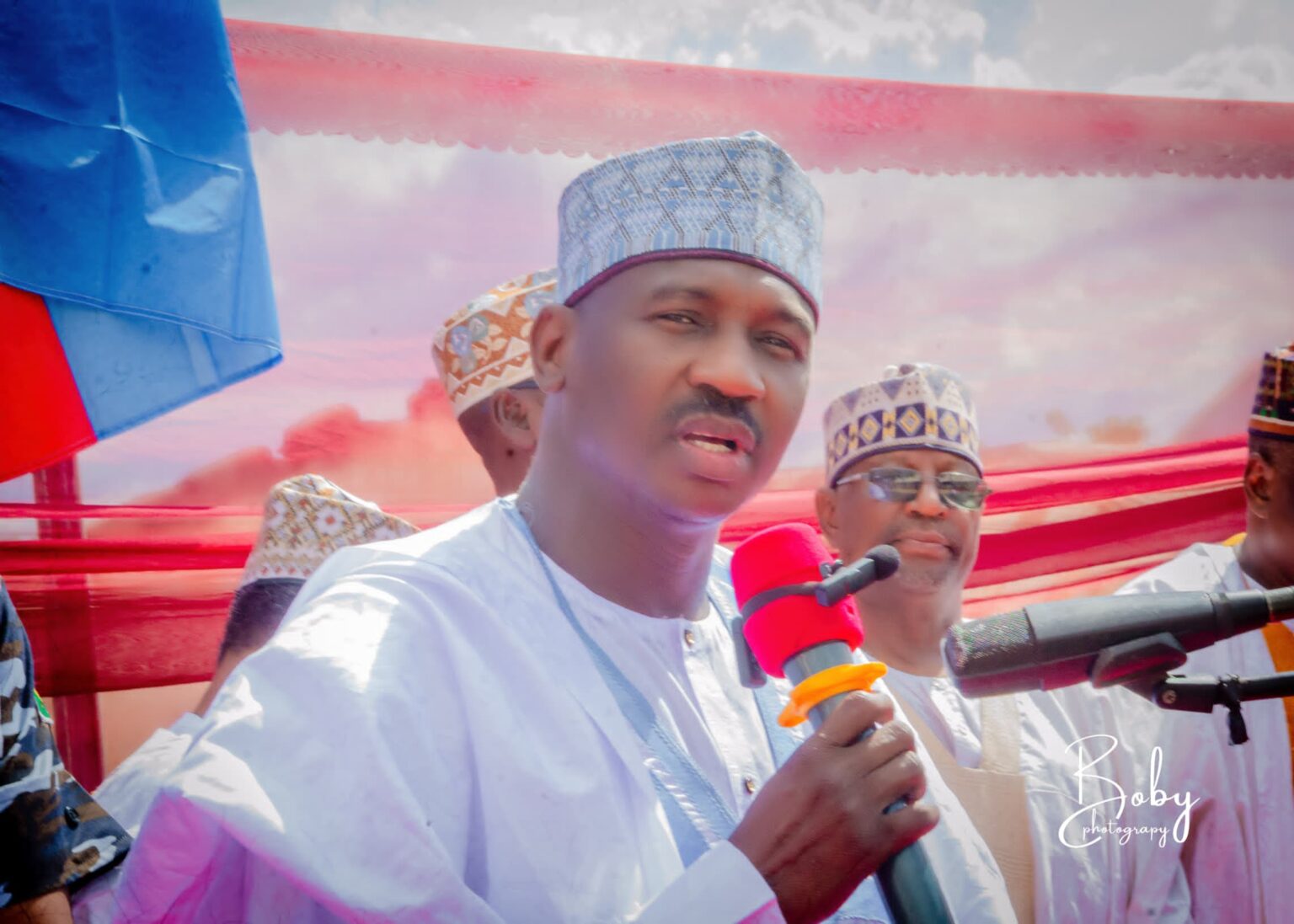
By Abubakar Dan Ali
Few issues shape daily life as directly as transportation. In Sokoto State, under Governor Ahmed Aliyu, the sector is undergoing a far-reaching transformation driven by a mobility agenda that blends mass-transit modernization with expanded water transport. Safety and affordability sit at the heart of these reforms, reflecting the governor’s commitment to improving the welfare of the people. His recent commissioning of new high-capacity buses, along with the procurement of motorized boats for riverine communities long affected by boat mishaps, signals a comprehensive rethinking of how people and goods should move across the state.
Amid Nigeria’s sharp rise in transportation costs following the removal of the fuel subsidy, these interventions mark a decisive shift toward practical, citizen-focused governance—one that prioritizes shared prosperity over the extravagance often associated with the political class. This stands in sharp contrast to former Governor Aminu Tambuwal, who was notorious for frequent private jet travel and for being an absentee leader.
The national economic backdrop explains why these reforms matter. After the removal of the fuel subsidy in May 2023, petrol prices surged nationwide, in many areas rising by 50 to 100 percent within weeks. National fare-monitoring data showed that average city bus fares doubled—from about ₦650 in May to over ₦1,285 in June—while intercity fares jumped from roughly ₦4,000 to more than ₦8,000. For millions who rely on daily commuting for business, education, and market activities, this was destabilizing. In Sokoto, a local study of over 300 residents found that rising transport costs sharply increased the prices of goods, as traders, farmers, and transporters passed higher logistical expenses onto consumers. Many residents began limiting travel or turning to informal and often unsafe transport alternatives.
It is against this backdrop that Governor Aliyu moved swiftly to expand the state’s transit fleet. The acquisition of 70 high-capacity buses, distributed across all 23 Local Government Areas and added to an earlier 40, has significantly increased transport access during a period of heavy mobility pressure. Operating on urban, semi-urban, and rural routes, the buses offer a structured and affordable alternative to the ageing minibuses, tricycles, and private motorcycles that had long dominated the sector.
Affordable public transport is not a luxury; it is an economic stabilizer and a necessity, especially in the absence of rail systems. By connecting farmers to markets, students to schools, workers to workplaces, and traders to commercial hubs, the buses support productivity, reduce the cost of doing business, and ease household financial pressures.
Crucially, Sokoto’s efforts go beyond simply purchasing buses. The state introduced a digital e-ticketing platform to reduce revenue leakages, eliminate the opacity of cash-based fare systems, and ensure full transparency in revenue collection. With digital fare systems, standardized ticketing, and real-time data, the government can analyze route performance, peak hours, maintenance needs, and ridership patterns. This represents a significant shift toward evidence-based transport management in a region traditionally dominated by informal systems. Transport failures in Nigeria often stem not from lack of investment but from weak management and revenue diversion. Sokoto’s adoption of technology is a deliberate attempt to break that cycle.
Governor Aliyu’s subsidy for female riders also reflects an understanding of transportation as a gendered challenge. Women in conservative northern communities often face limited income, safety concerns, cultural barriers, and disproportionate dependence on public transport. High fares discourage school attendance among girls, hinder women’s participation in the economy, and restrict access to healthcare. A fare-subsidy program for female passengers—whether through discounted digital tickets or subsidized passes—has already improved mobility for women traders, students, and healthcare seekers. The policy also supports the local economy, as women play a major role in informal commerce and agricultural value chains.
While the bus expansion and digital reforms have gained attention, the governor’s intervention in riverine communities is equally significant. In these areas, waterways—not roads—are the primary mode of movement. Recent years have seen troubling boat accidents, including a tragic incident in Goronyo LGA where a boat carrying traders capsized, resulting in four deaths and several missing persons. These communities rely on wooden, manually paddled boats that are often overloaded, poorly maintained, and operated without life jackets. Such vessels are unsafe during heavy currents and pose daily risks to children, traders, and commuters.
To address this vulnerability, the state government procured and distributed 20 motorized boats and 2,000 life jackets to riverine villages across multiple LGAs. At the distribution event in Dundaye village, officials emphasized that these boats were essential infrastructure—not mere donations—meant to ensure that no community is cut off from markets, schools, or hospitals during the rainy season. The motorized boats, paired with life jackets, mark a shift away from unsafe wooden vessels and underscore a commitment to safety and inclusion in historically underserved areas. The initiative also aligns with national calls from the Blue Economy Ministry urging states to phase out unsafe wooden boats after a series of inland-water tragedies.
The implications of these interventions are far-reaching. For rural and riverine Sokoto, improved water transport means better market access for farmers who often lose revenue when bad weather prevents them from crossing rivers. It ensures safer travel for schoolchildren and guarantees that pregnant women and patients can reach health facilities even during flooding seasons. It also reduces the likelihood of mass casualties that have traumatized riverine communities for years. In essence, the initiative extends the democratic dividend to geographically isolated populations long neglected in mainstream development conversations.
When road-based transit and water transport investments are viewed together, a clear vision emerges: a multi-modal mobility strategy that integrates different terrains, addresses diverse community needs, and connects both densely populated and remote areas. This contrasts sharply with governance models in which public funds are directed toward luxury travel and personal comfort with little impact on citizens’ lives. Governor Aliyu’s choices demonstrate that leadership can be practical and service-driven.
Still, the sustainability of this transport revolution depends on key factors. Maintenance is paramount. Nigeria’s history is littered with projects launched with fanfare only to deteriorate due to poor maintenance culture. Buses must be serviced regularly, technicians trained, spare parts stocked, and funds ring-fenced for upkeep. The same applies to the boats: engines require servicing, fuel storage systems must be maintained, operators trained and licensed, and damaged life jackets replaced. Without disciplined maintenance, both buses and boats will deteriorate, undermining progress.
Cost management is another challenge. Public transport must remain affordable, but the state must also recover enough revenue to fuel, insure, and maintain assets. E-ticketing can reduce revenue leakage, but the system must be professionally managed. The governor has made strong progress by tackling politicization—preventing the allocation of buses as political gifts, blocking unqualified actors from operational control, and curbing revenue diversion. A technically competent, insulated transport authority is essential.
Safety enforcement on waterways also requires vigilance. Even with motorized boats, overloading remains a danger if not strictly controlled. All passengers must use life jackets. Local leaders must enforce compliance. Waterways authorities must inspect vessels and certify operators. These responsibilities demand consistent oversight.
Despite these challenges, the current trajectory is promising. By investing in transport systems that millions rely on, Sokoto is moving toward a development model where infrastructure is functional and impactful. From buses to boats, from e-ticketing to gender-sensitive subsidies, the Aliyu administration has shown that public funds can be used to solve real problems—lowering household expenses, reducing accident risks, connecting rural markets, empowering women, and improving quality of life.
In a time of inflation, economic anxiety, and public distrust in political institutions, such practical investments send a powerful message of leadership committed to delivering real value. The emerging multi-modal network suggests that the dividends of democracy—often spoken of in abstract terms—are being delivered in concrete forms: safer river travel, affordable commutes, a bus that takes a child to school, a boat that helps a farmer reach the market, and above all, a system that places people at the center of governance.
If well maintained and transparently managed, the state’s investment in road and river mobility could become a model for other states like Niger and Kwara. Governor Aliyu has demonstrated that even in difficult economic times, visionary leadership can create the conditions for shared prosperity, social inclusion, and human dignity.


Join the Conversation